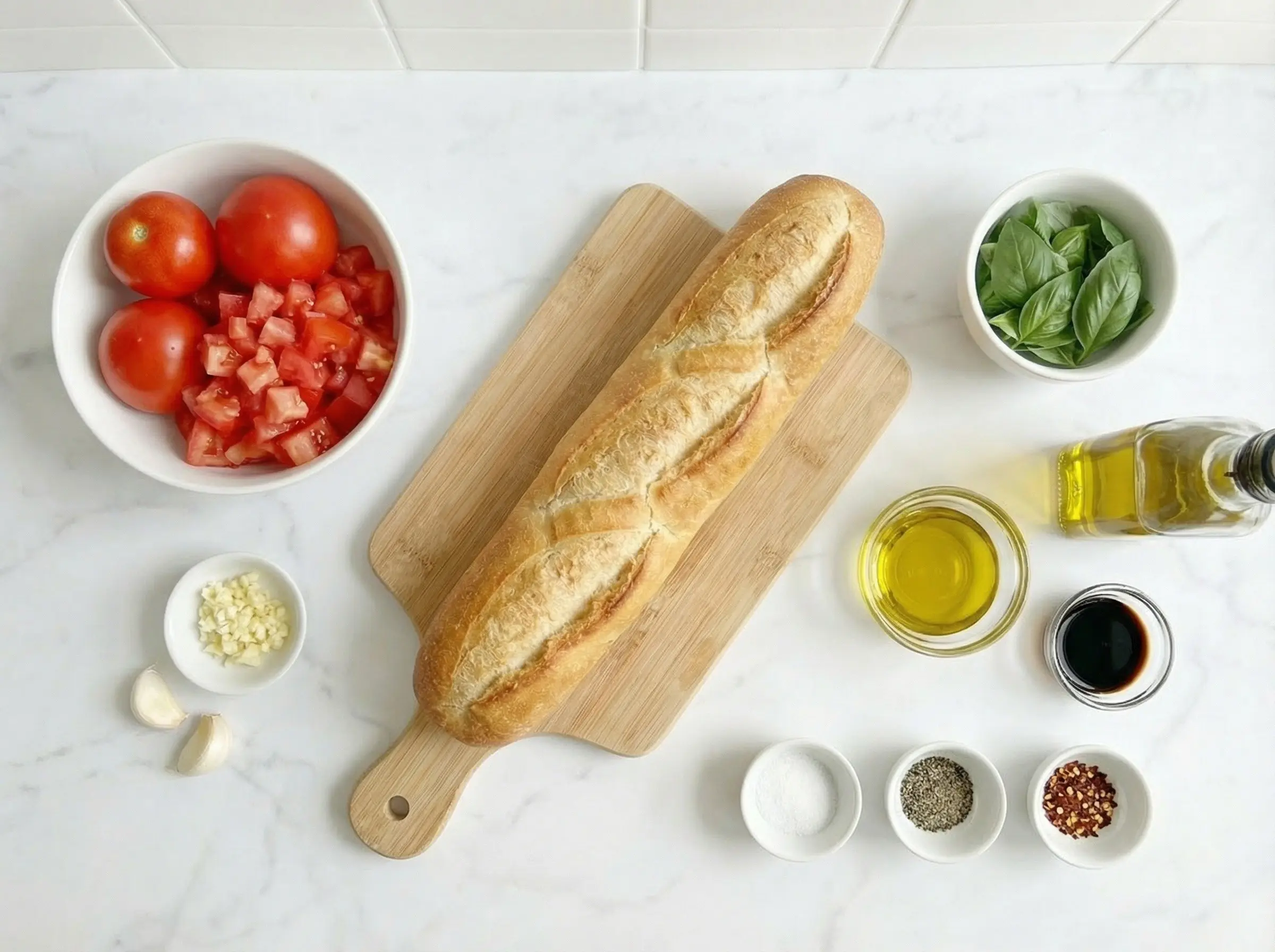
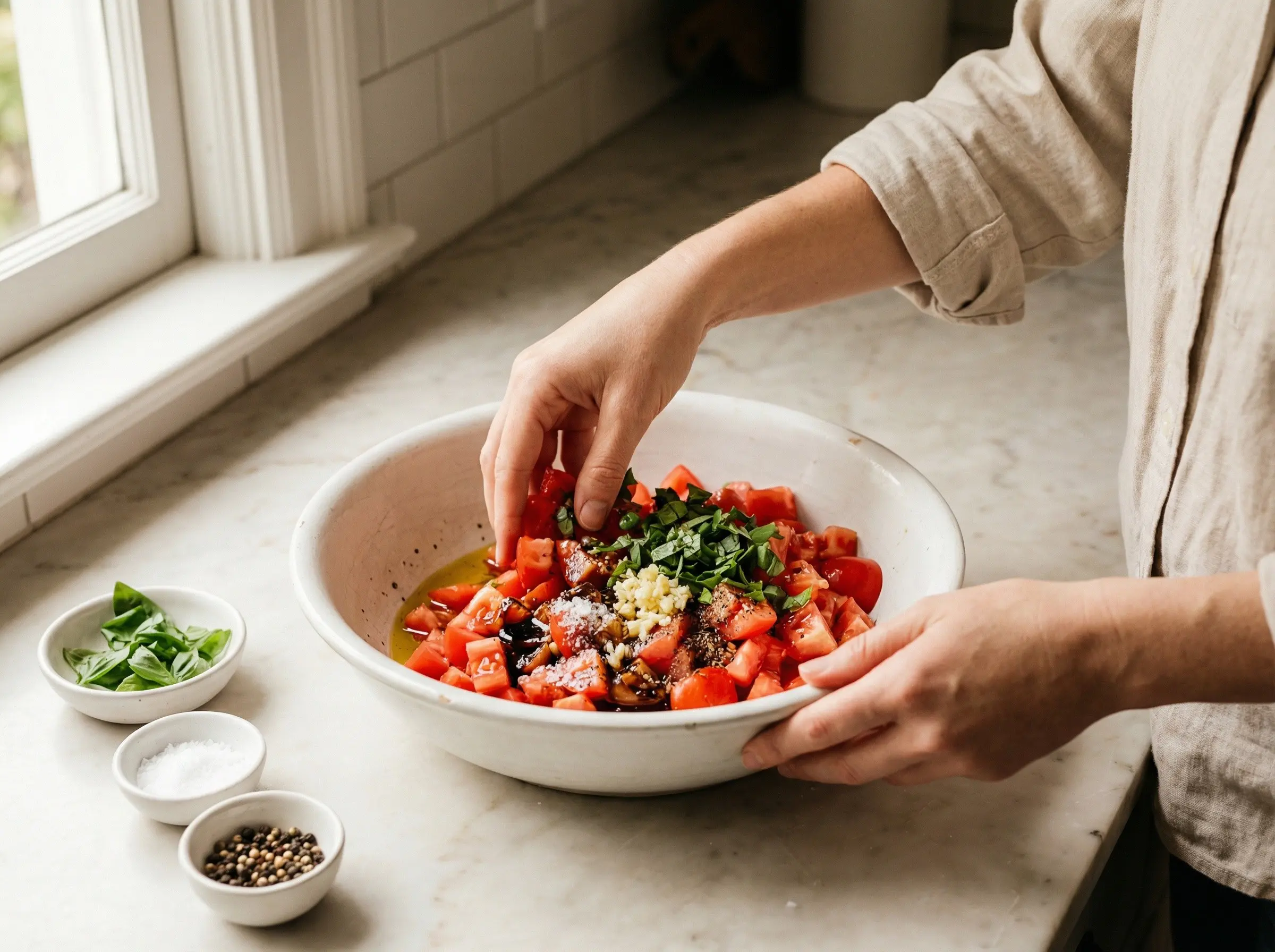
1Start by preparing the tomato topping, which should be done no more than 30-60 minutes before serving to prevent the bread from becoming soggy. Choose ripe, flavorful tomatoes - this is crucial as tomatoes are the star of this dish. Roma or plum tomatoes work well as they are less watery, but any ripe summer tomato will be delicious. Dice the tomatoes into small pieces, about 1/4 to 1/2 inch cubes. If you prefer less moisture, you can remove the seeds and pulp, though many Italian cooks leave them in for more flavor. Place the diced tomatoes in a medium bowl and add the minced garlic, chopped fresh basil, extra virgin olive oil, balsamic vinegar, salt, black pepper, and red pepper flakes if using. Toss everything together gently until well combined. Taste and adjust seasoning - you might want more salt, a splash more vinegar for acidity, or more basil. Let the mixture sit at room temperature while you prepare the bread, allowing the flavors to meld.
2Slice the baguette or Italian bread on a diagonal into slices about 1/2 to 3/4 inch thick. Cutting on the diagonal gives you larger surface area for the topping. You should get about 12-16 slices depending on the size of your bread. The bread should be crusty on the outside with a tender interior - avoid soft sandwich bread which will not hold up to the topping. Day-old bread actually works perfectly for bruschetta as it is slightly drier and will not get soggy as quickly. If your bread is very fresh, you can leave the slices out for 30 minutes to dry slightly before toasting.
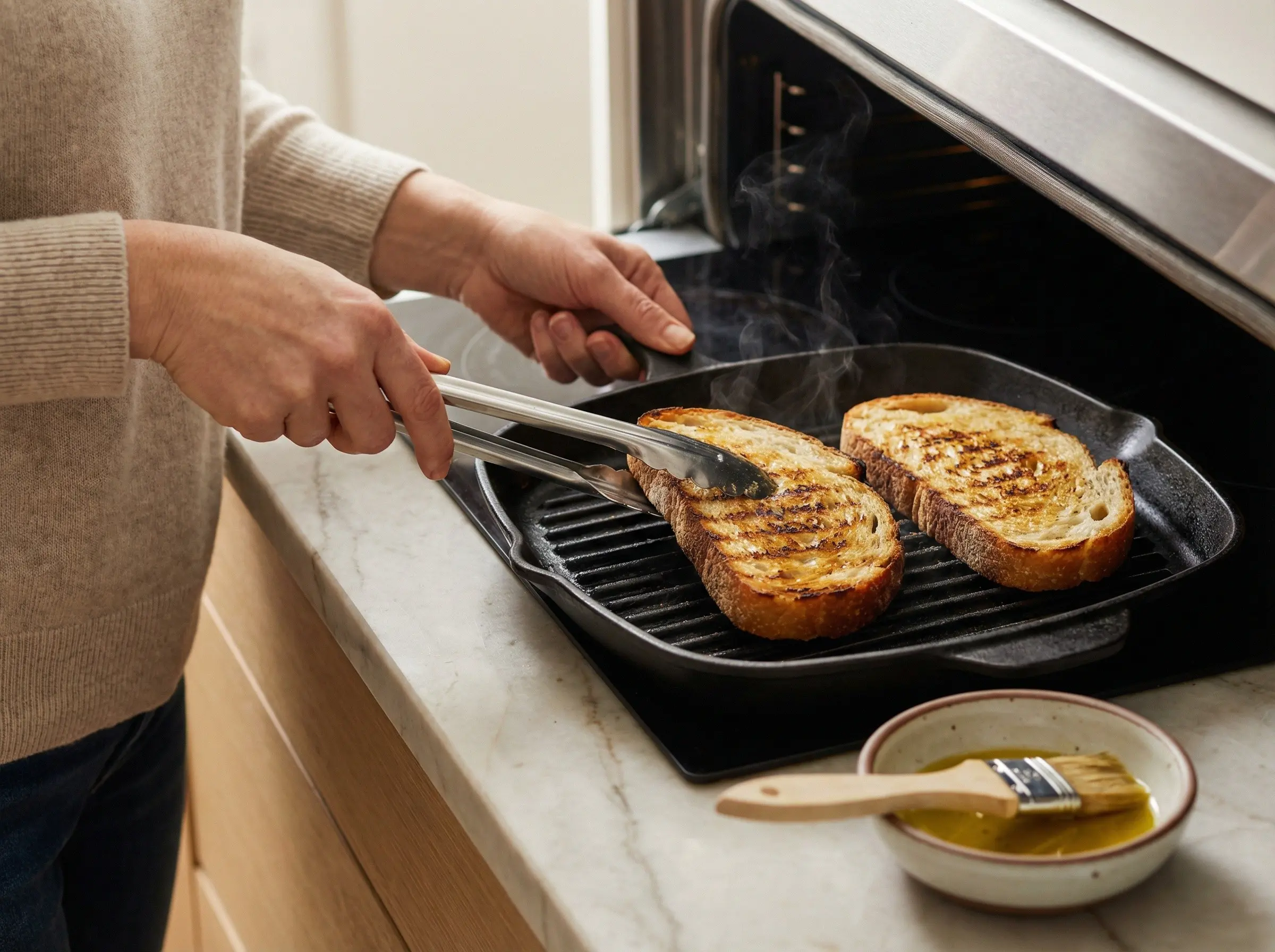
3Toast the bread slices until golden and crispy. You have several options: grill them on a grill or grill pan for authentic charred flavor, broil them in the oven for 2-3 minutes per side, or toast them in a toaster. For the most authentic flavor, brush each side lightly with olive oil before grilling or broiling - this helps them crisp up beautifully and adds flavor. The bread should be golden brown and crunchy on the surface but still have some give in the center. If you grill or broil, watch carefully as bread can go from perfect to burnt very quickly. You want a nice crunch that will stand up to the juicy tomato topping.
4While the bread is still warm from toasting, take the whole garlic cloves and cut them in half. Rub the cut side of the garlic over one side of each toasted bread slice. The rough, toasted surface of the bread acts like a grater, pulling the garlic flavor into the bread. Use a light hand - you want a subtle garlic flavor, not overpowering. This traditional technique imparts fresh garlic flavor without the harshness of raw minced garlic sitting on top. After rubbing with garlic, drizzle each slice lightly with good quality extra virgin olive oil. The oil soaks into the warm bread and adds richness and flavor. Do not skip this step - the combination of garlic and olive oil on toasted bread is the foundation of great bruschetta.
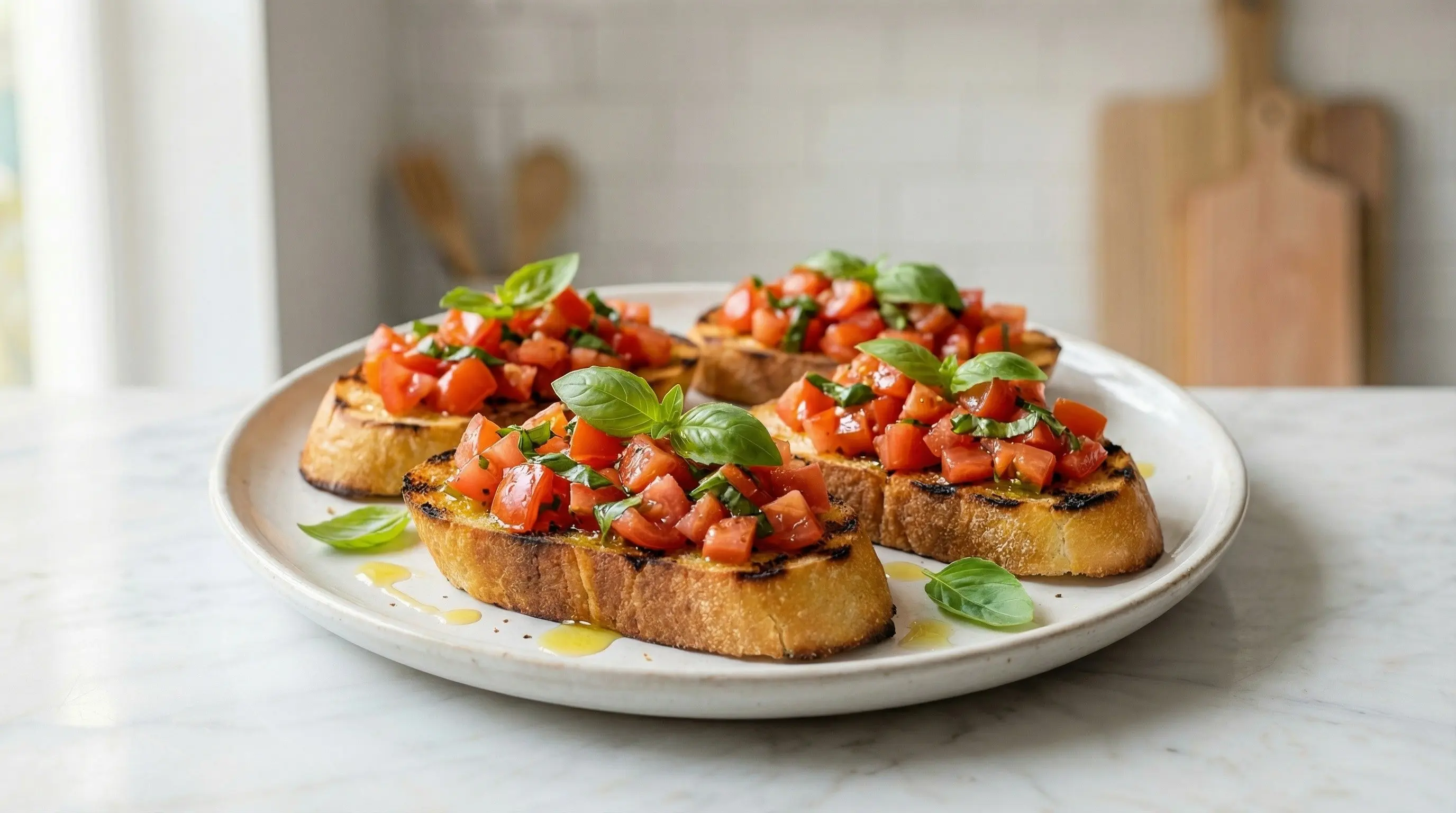
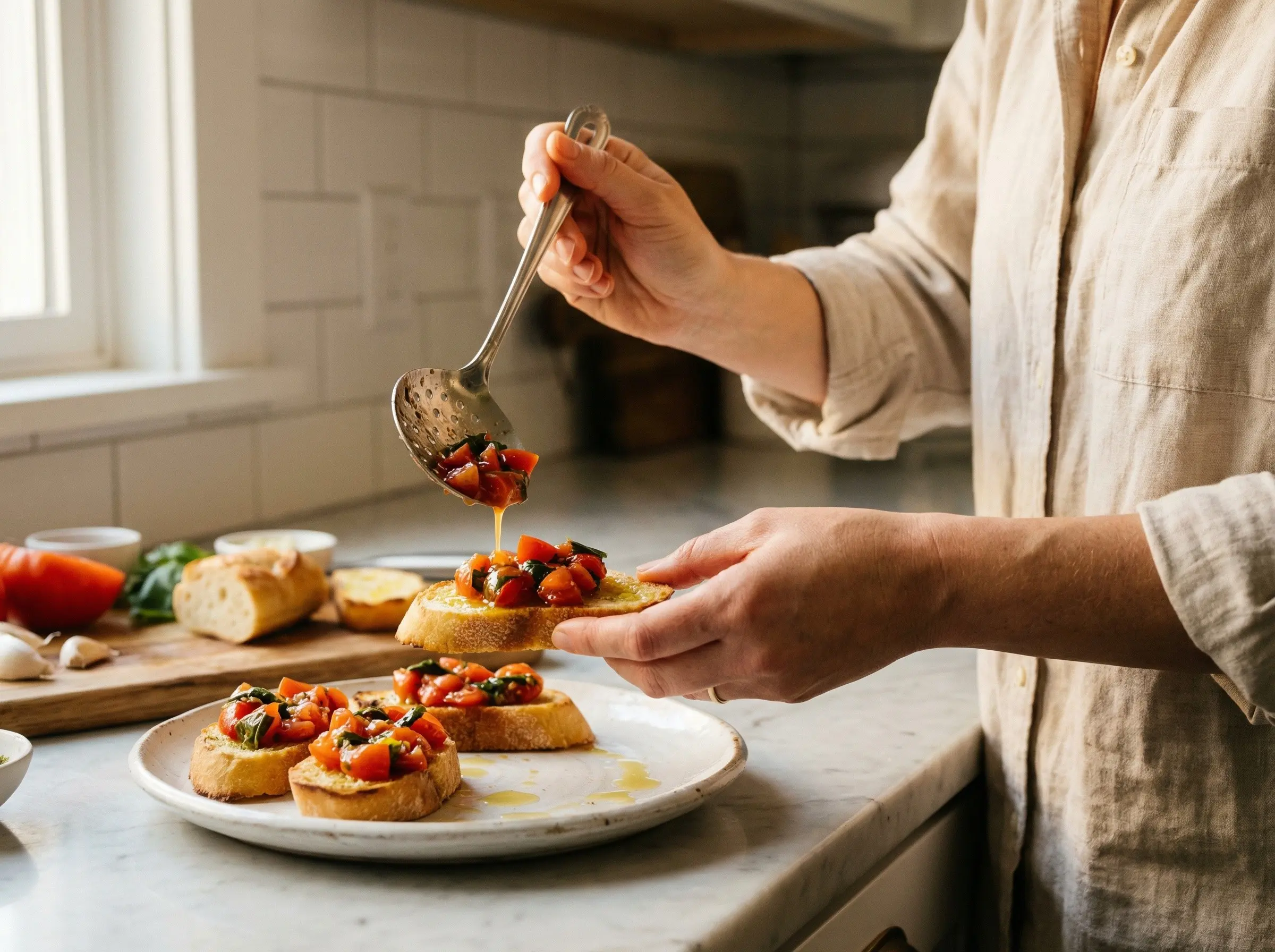
5Just before serving, give the tomato mixture a quick stir. Some liquid will have accumulated at the bottom of the bowl from the tomatoes releasing their juices - this is fine and adds flavor, but you do not want to add too much liquid to the bread. Using a slotted spoon, scoop a generous amount of the tomato mixture onto each slice of prepared bread, allowing excess liquid to drain off. You want the bread to be topped generously but not swimming in juice. Arrange the bruschetta on a serving platter. The tomatoes should look fresh and vibrant, piled high on the golden toasted bread.
6Finish the bruschetta with a final drizzle of your best extra virgin olive oil over the top and a small sprinkle of flaky sea salt if desired. Garnish with a few small whole basil leaves for visual appeal. Serve immediately while the bread is still crispy. Bruschetta is meant to be eaten right away - if it sits too long, the bread will absorb the tomato juices and become soggy. This is an appetizer best enjoyed as soon as it is assembled, ideally with a glass of crisp Italian white wine or Prosecco. The contrast of crunchy bread, juicy tomatoes, fragrant basil, and fruity olive oil represents Italian cuisine at its finest - simple, fresh, and absolutely delicious. Any leftover tomato mixture can be saved and used as a pasta sauce, stirred into scrambled eggs, or enjoyed with crackers.


 Download