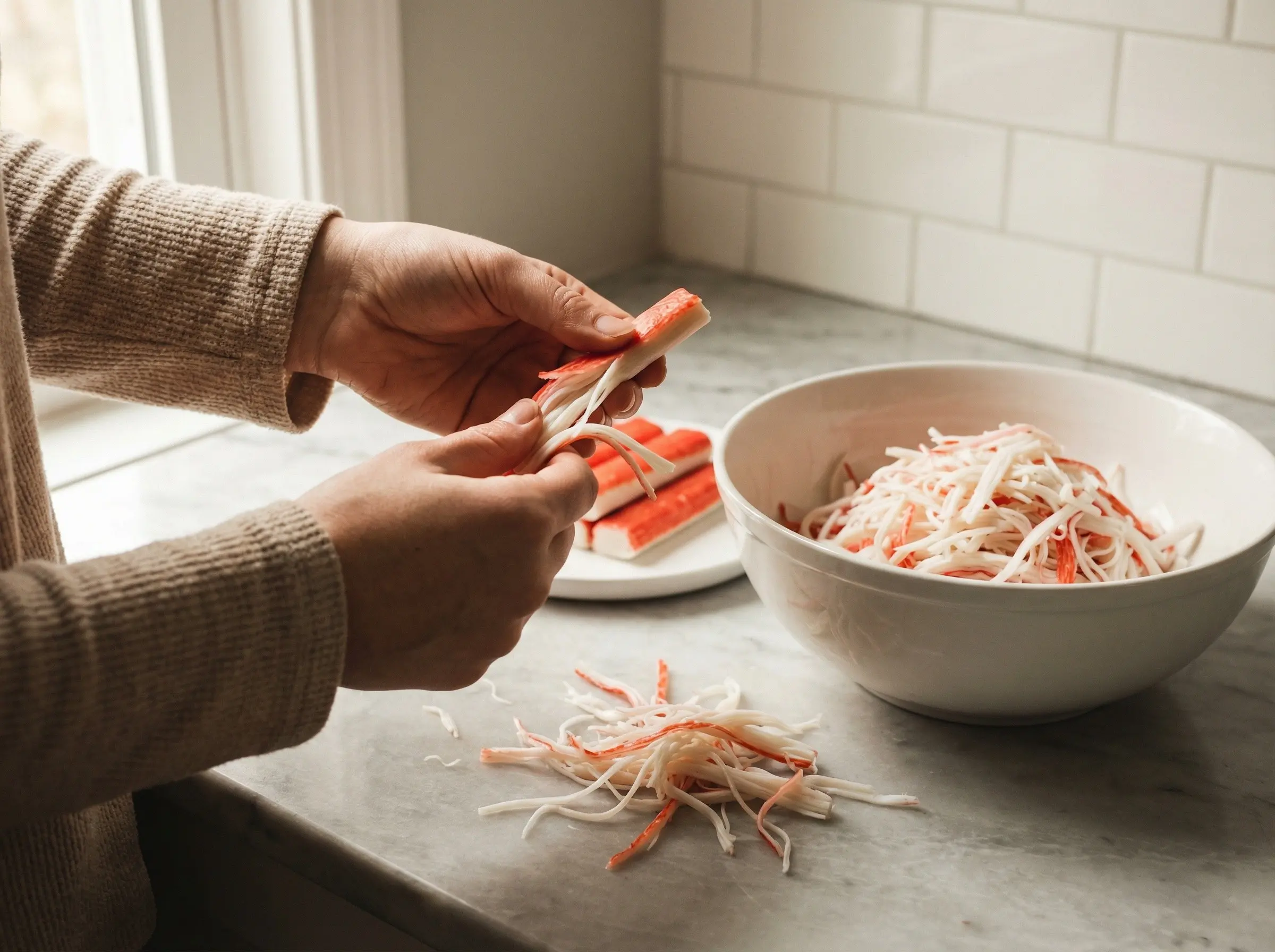
1Prepare the crab sticks by shredding them into thin, delicate strands. The best method is to peel each stick apart along its natural layers - crab sticks are designed to separate into thin, stringy pieces that resemble real crab meat. Simply pull each stick apart lengthwise into thin shreds. This creates a much more appealing texture and appearance than cutting with a knife, which produces blunt, chunky pieces. If the sticks are difficult to shred, refrigerate them for 30 minutes first - cold sticks separate more cleanly. Place the shredded crab in a large mixing bowl.
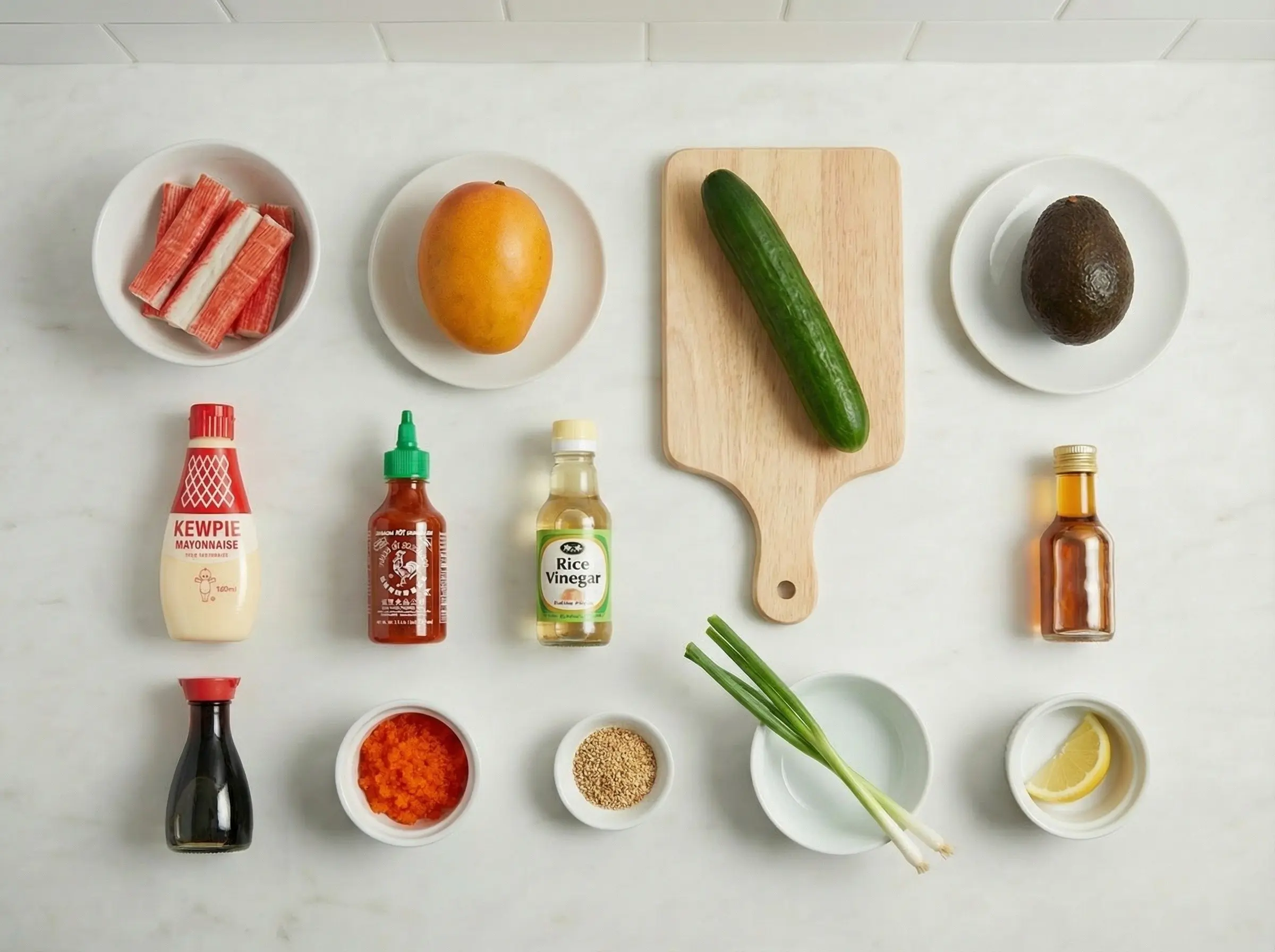
2Prepare the vegetables and fruit. Peel the mango and cut the flesh into small cubes, about 1/2 inch - the mango should be ripe but still slightly firm so it holds its shape when tossed. For the cucumber, cut it in half lengthwise and scoop out the watery seeds with a spoon - this prevents the salad from becoming soggy. Slice the seeded cucumber into thin half-moons or julienne it into matchstick-sized strips for a more elegant presentation. Cut the avocado in half, remove the pit, and dice the flesh into cubes similar in size to the mango. Toss the avocado gently with the lemon juice to prevent browning.
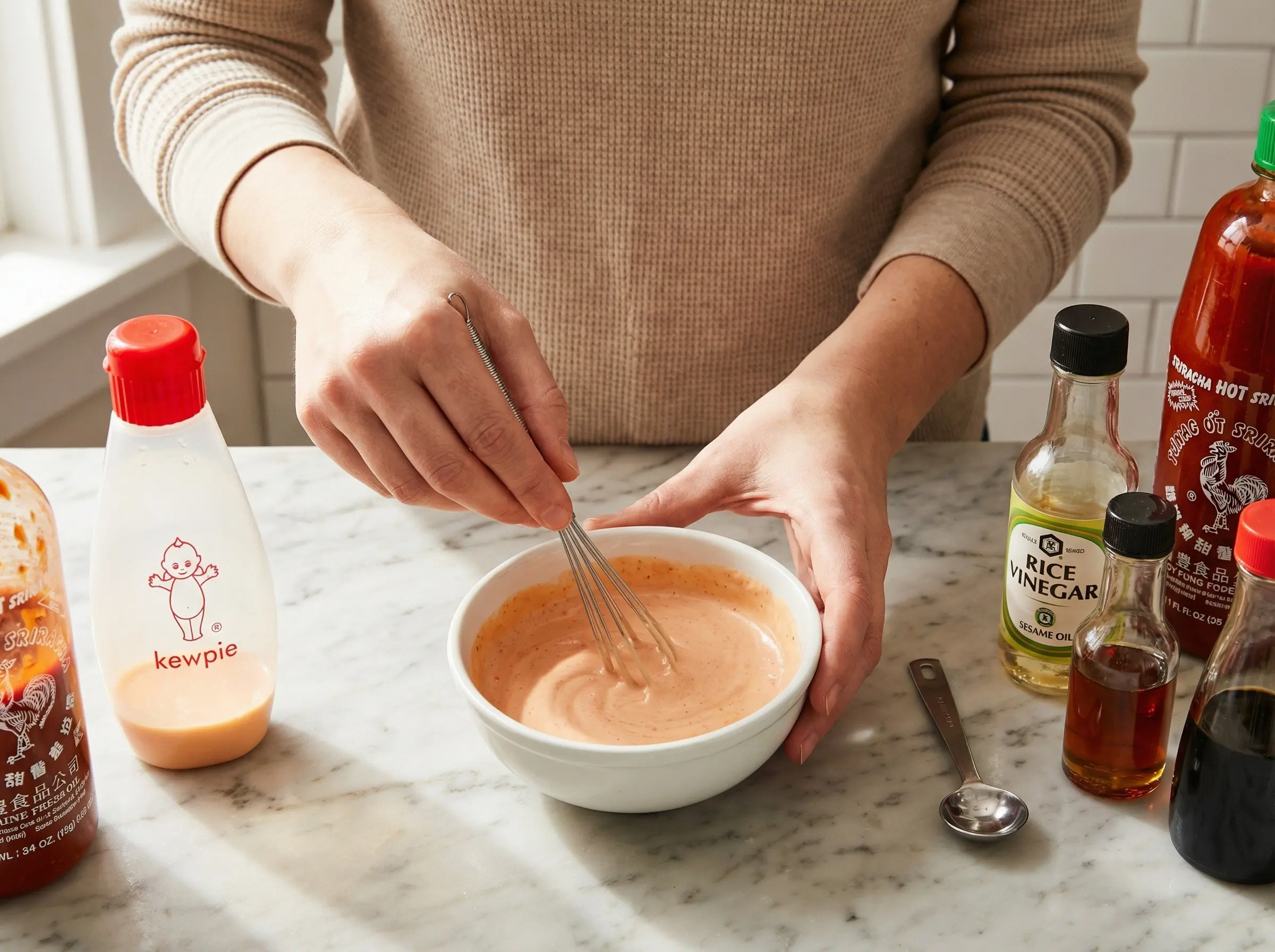
3Make the spicy mayo dressing. In a small bowl, combine the Kewpie mayonnaise, Sriracha or chili sauce, rice vinegar, sesame oil, and soy sauce. Whisk until smooth and well combined. Kewpie mayonnaise is essential for authentic flavor - it is made with egg yolks only (no whites), rice vinegar, and MSG, giving it a richer, tangier, more umami-packed flavor than Western mayonnaise. If unavailable, regular mayonnaise can be used but add an extra splash of rice vinegar and a pinch of sugar. Taste the dressing and adjust to your preference - more Sriracha for heat, more mayo for creaminess, or more vinegar for tang.
4Add the prepared mango, cucumber, and avocado to the bowl with the shredded crab. Pour the spicy mayo dressing over the ingredients. Using a large spoon or spatula, gently fold everything together until the dressing coats all the ingredients evenly. Be gentle to avoid mashing the avocado or breaking up the delicate crab shreds. The salad should be well-dressed but not drowning in sauce - add more dressing if needed or reserve some on the side. Fold in half of the sliced green onions and half of the tobiko or masago, reserving the rest for garnish.
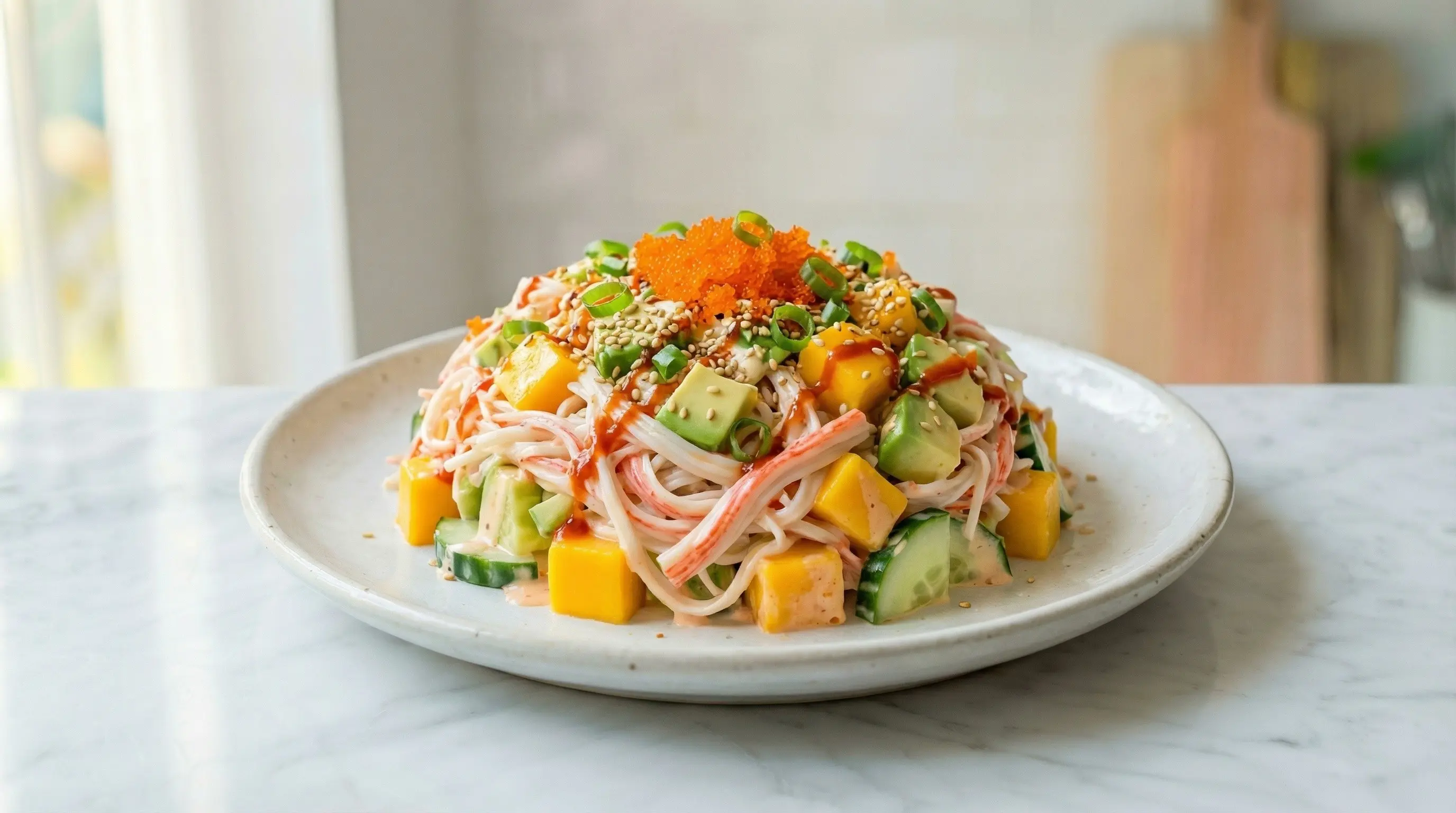
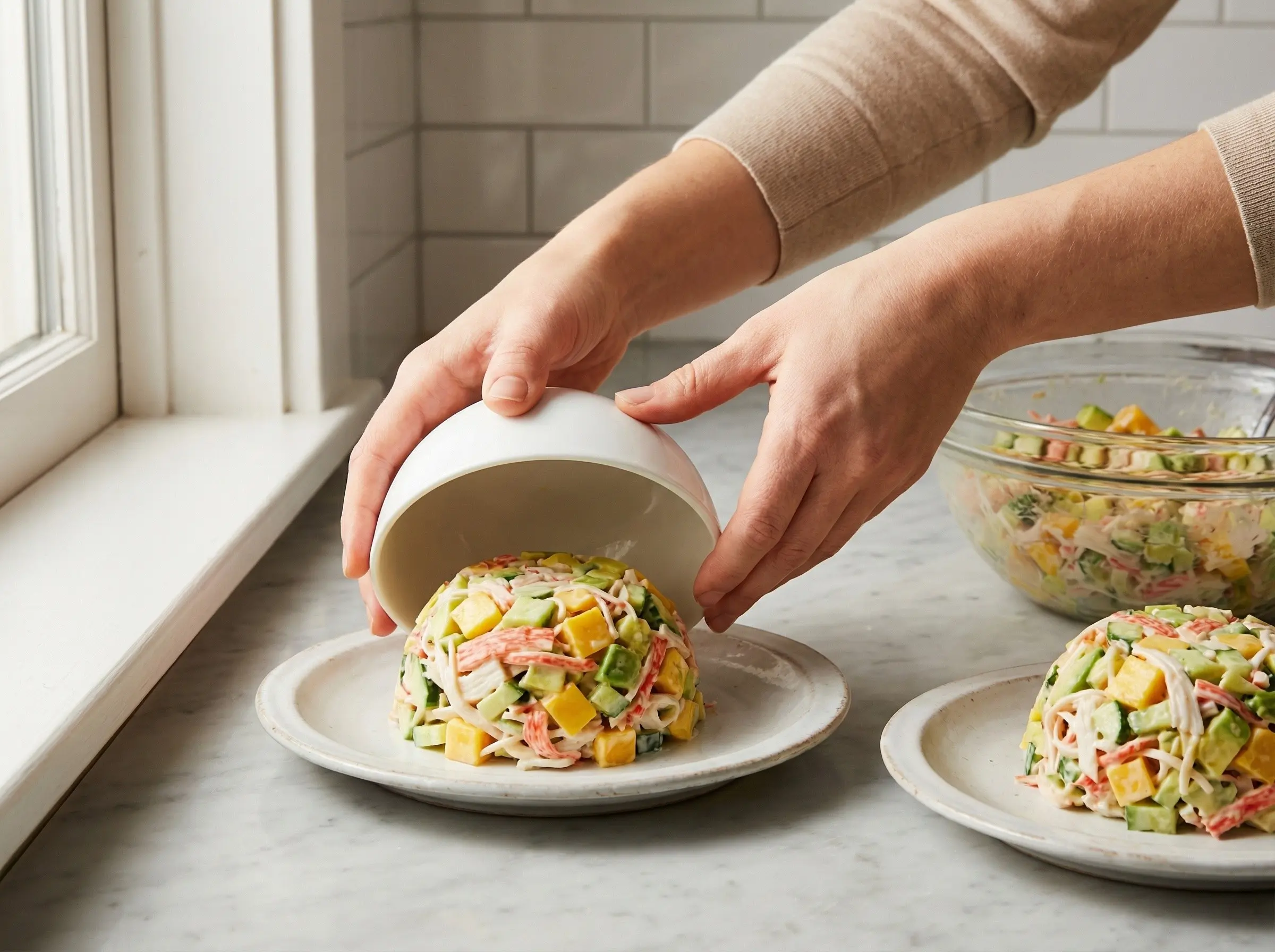
5For an attractive presentation, mound the kani salad onto serving plates or into small bowls. If serving as a sushi bar-style appetizer, you can shape it into a neat dome using a ring mold or a small bowl pressed and inverted onto the plate. For a more dramatic presentation, serve it inside a halved avocado shell or on a bed of shredded lettuce or daikon radish. The visual impact is important for this dish - it should look fresh, colorful, and inviting.
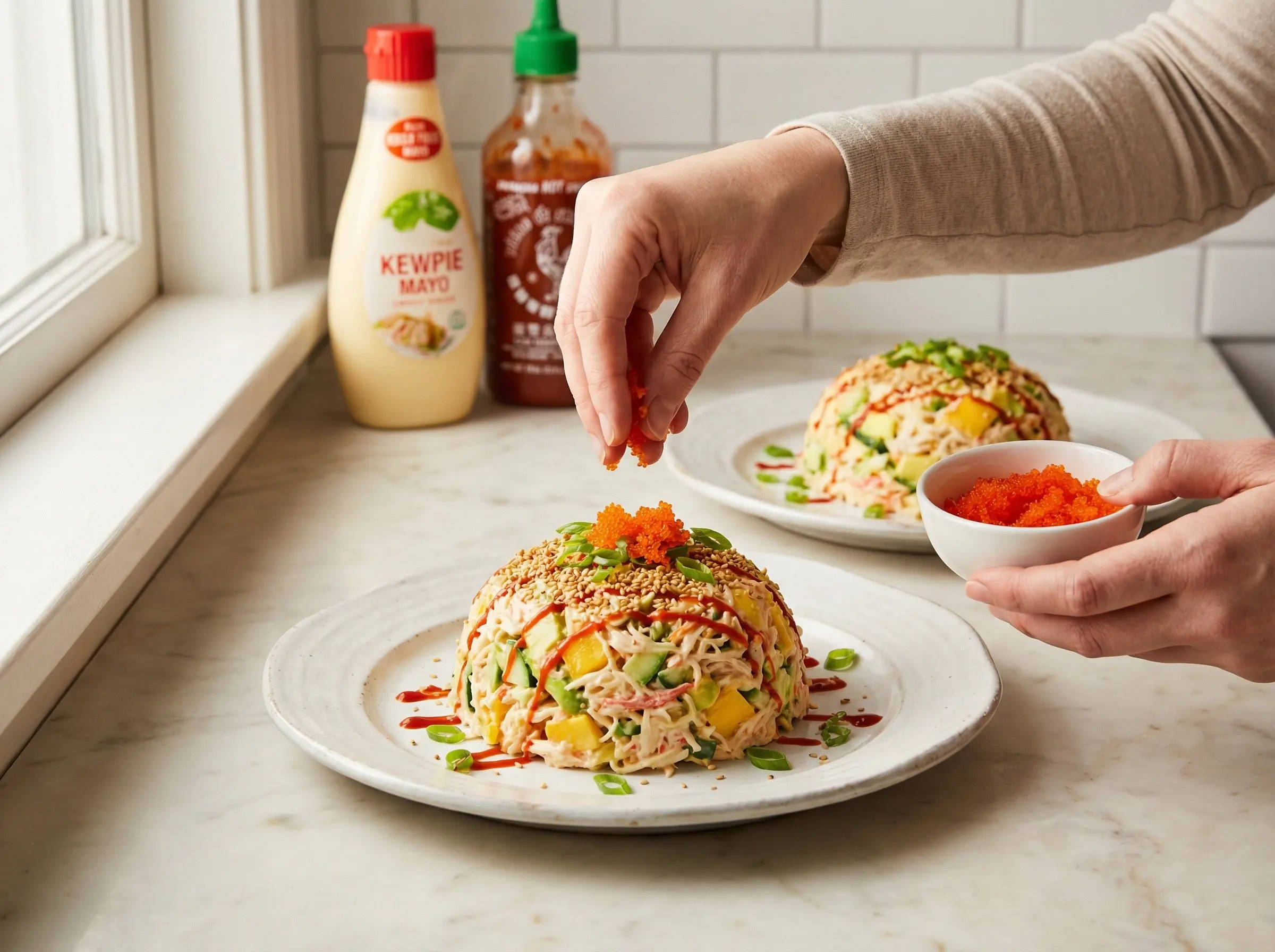
6Garnish the salad with the remaining tobiko or masago scattered over the top - their bright orange color provides beautiful contrast. Sprinkle with toasted sesame seeds and the reserved sliced green onions. For extra flair, drizzle a thin line of Sriracha or eel sauce (unagi sauce) over the top. Some restaurants also add crispy fried wonton strips or tempura flakes (tenkasu) for additional crunch. Serve immediately while the ingredients are cold and fresh. Kani salad does not store well as the avocado browns, the cucumber releases water, and the crab sticks absorb the dressing and become mushy. If you need to prepare ahead, keep the dressing and ingredients separate and combine just before serving. Enjoy as a refreshing appetizer, a light lunch, or as a side dish alongside sushi and sashimi.


 Download