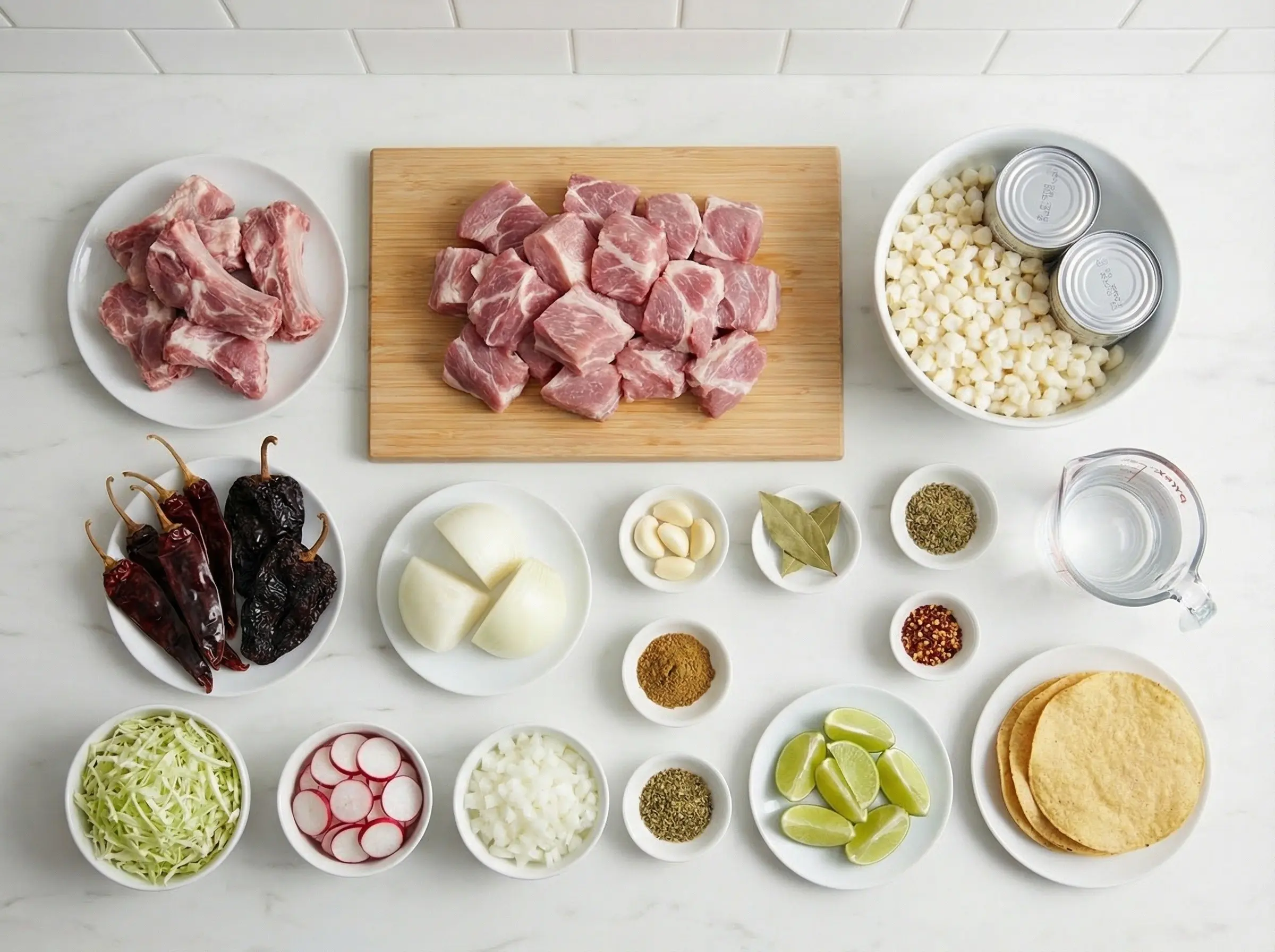
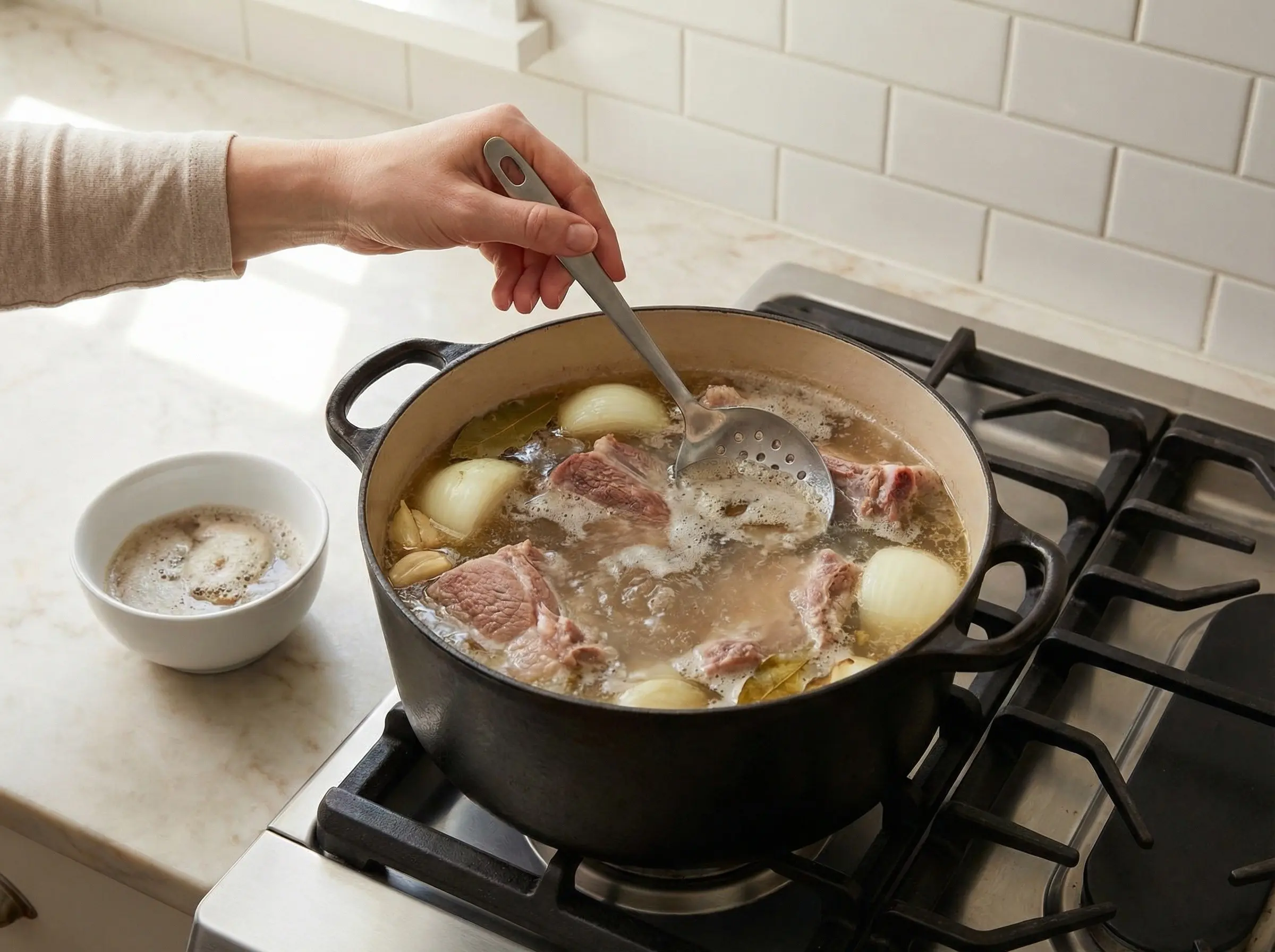
1Cook the pork. Place the pork shoulder chunks and neck bones in a large stockpot or Dutch oven. Add the quartered onion, 4 of the garlic cloves, bay leaves, and 1 tablespoon salt. Cover with the water and bring to a boil over high heat. Skim off any foam that rises to the surface - this creates a cleaner, clearer broth. Reduce heat to low, cover partially, and simmer gently for 1.5 to 2 hours until the pork is completely tender and shreds easily with a fork. The neck bones add body and richness to the broth.
2While the pork simmers, prepare the chile sauce. Remove the stems and seeds from the guajillo and ancho chiles - the seeds add bitterness, so remove them thoroughly. Toast the chiles in a dry skillet over medium heat for 1-2 minutes per side until fragrant and slightly puffed. Do not burn them or the sauce will be bitter. Place the toasted chiles in a bowl and cover with very hot water. Let soak for 20-30 minutes until completely soft and pliable.
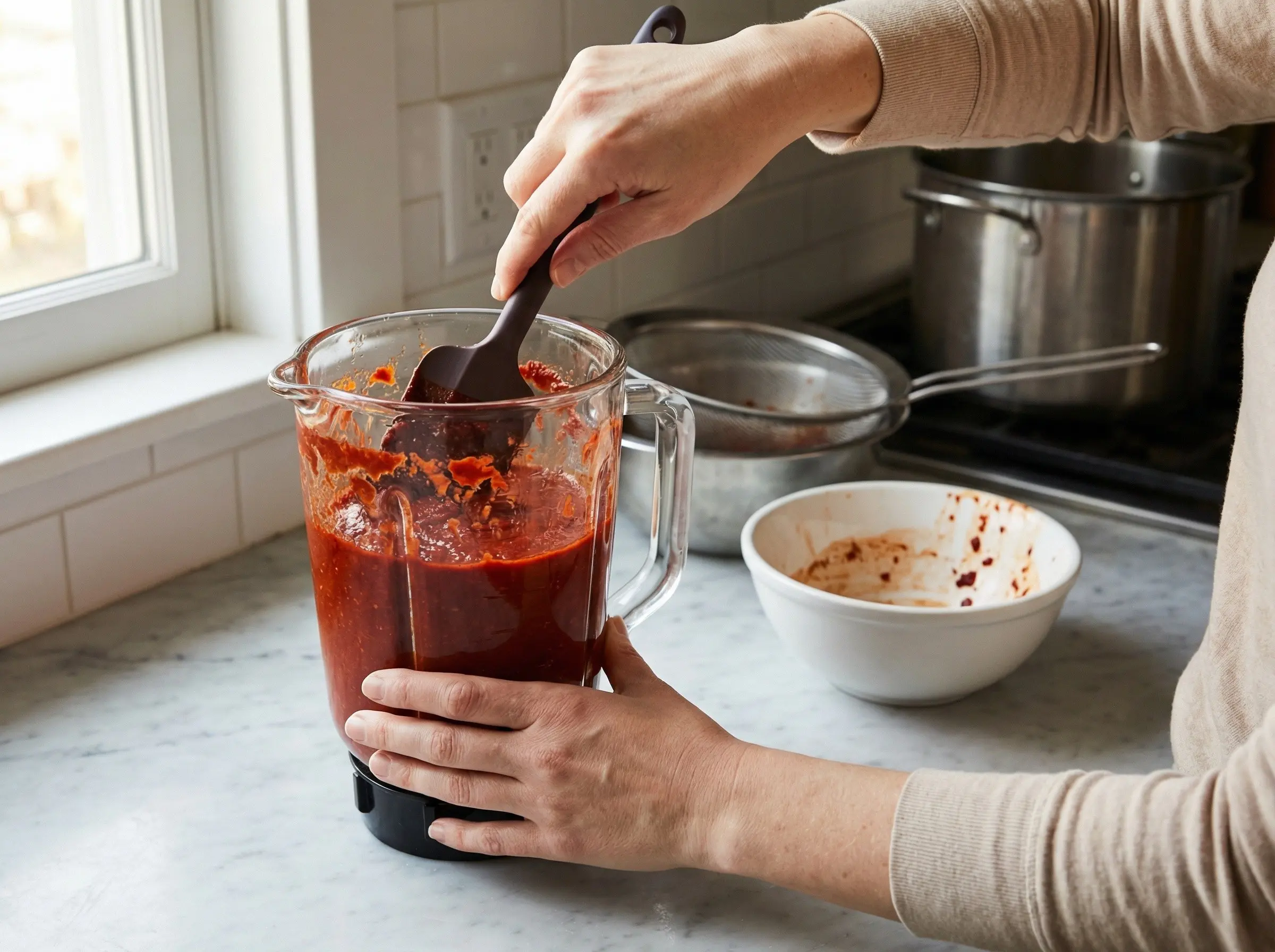
3Make the chile puree. Drain the soaked chiles, reserving 1 cup of the soaking liquid. Transfer the chiles to a blender along with the remaining 2 raw garlic cloves, oregano, cumin, and about 1/2 cup of the soaking liquid. Blend on high until completely smooth, adding more soaking liquid as needed to achieve a pourable consistency. The puree should be thick but not paste-like. Strain through a fine-mesh sieve into a bowl, pressing with a spatula to extract all the liquid. Discard the solids. This extra step ensures a silky-smooth broth.
4When the pork is tender, remove the meat and bones from the broth with a slotted spoon. Set the meat aside to cool slightly. Strain the broth through a fine-mesh sieve into a clean pot, discarding the cooked onion, garlic, and bay leaves. You should have about 8 cups of rich pork broth. Skim excess fat from the surface if desired, though some fat adds flavor. Shred the pork into bite-sized pieces, discarding any bones, cartilage, and excess fat. Return the shredded pork to the strained broth.
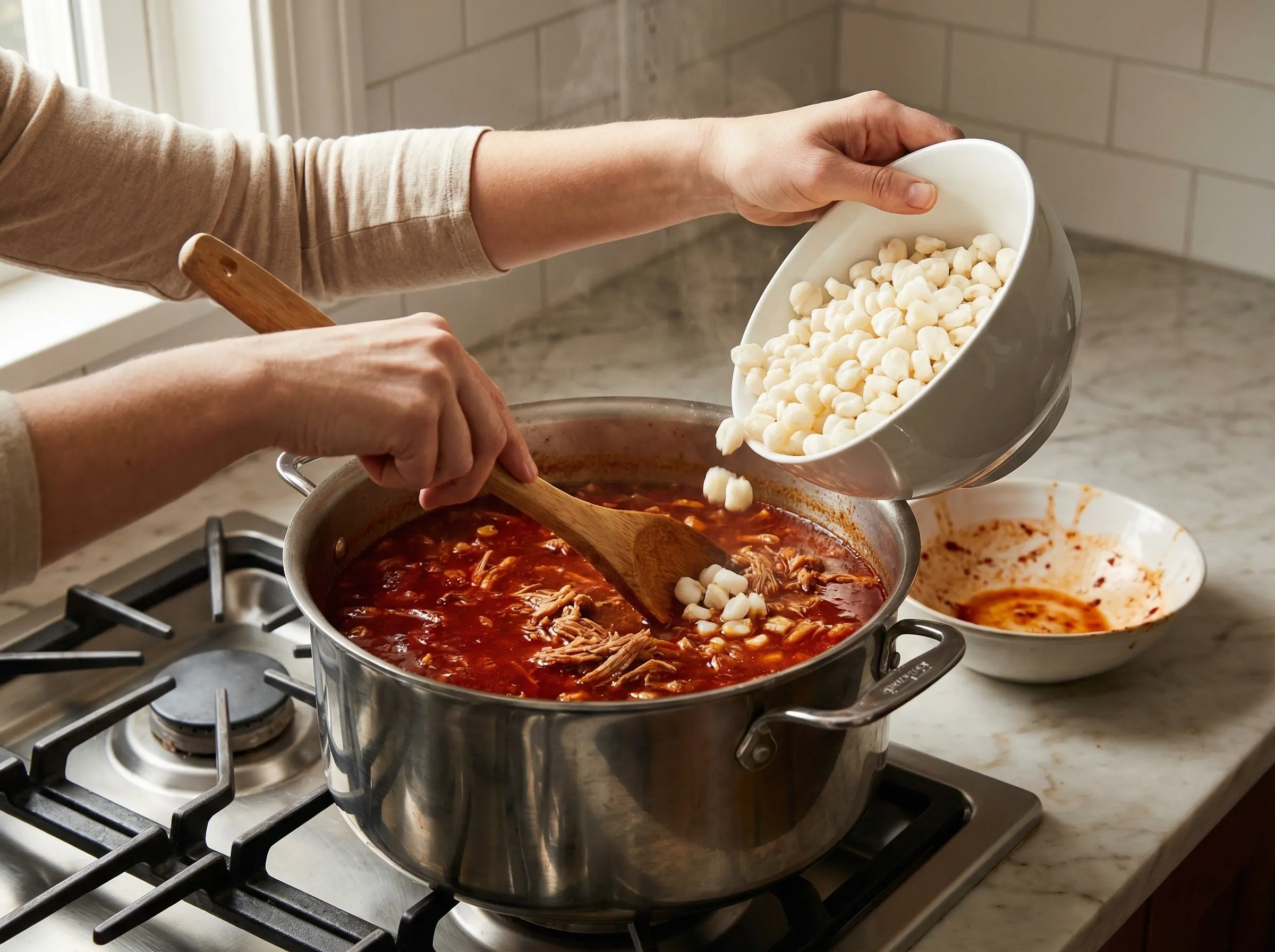
5Add the chile puree to the pot with the pork and broth. Stir well to combine - the broth should turn a beautiful deep red color. Add the drained hominy and stir to incorporate. Bring to a simmer over medium heat, then reduce to low and cook for 30-45 minutes, allowing the flavors to meld and the hominy to absorb some of the chile-infused broth. The pozole should be brothier than a stew but heartier than a soup. Taste and adjust seasoning - it will likely need more salt. The flavor should be rich, slightly spicy, and deeply savory.
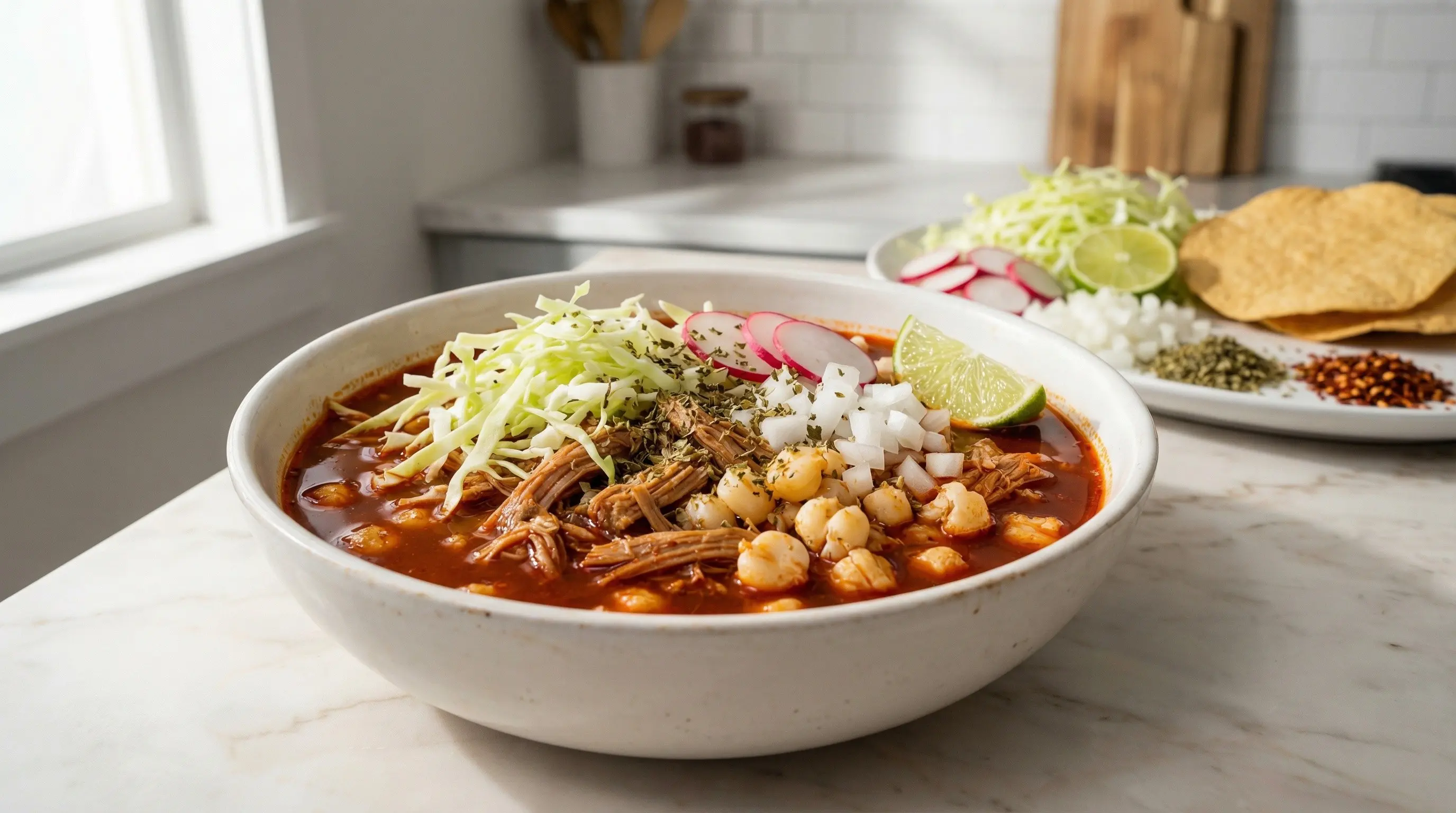
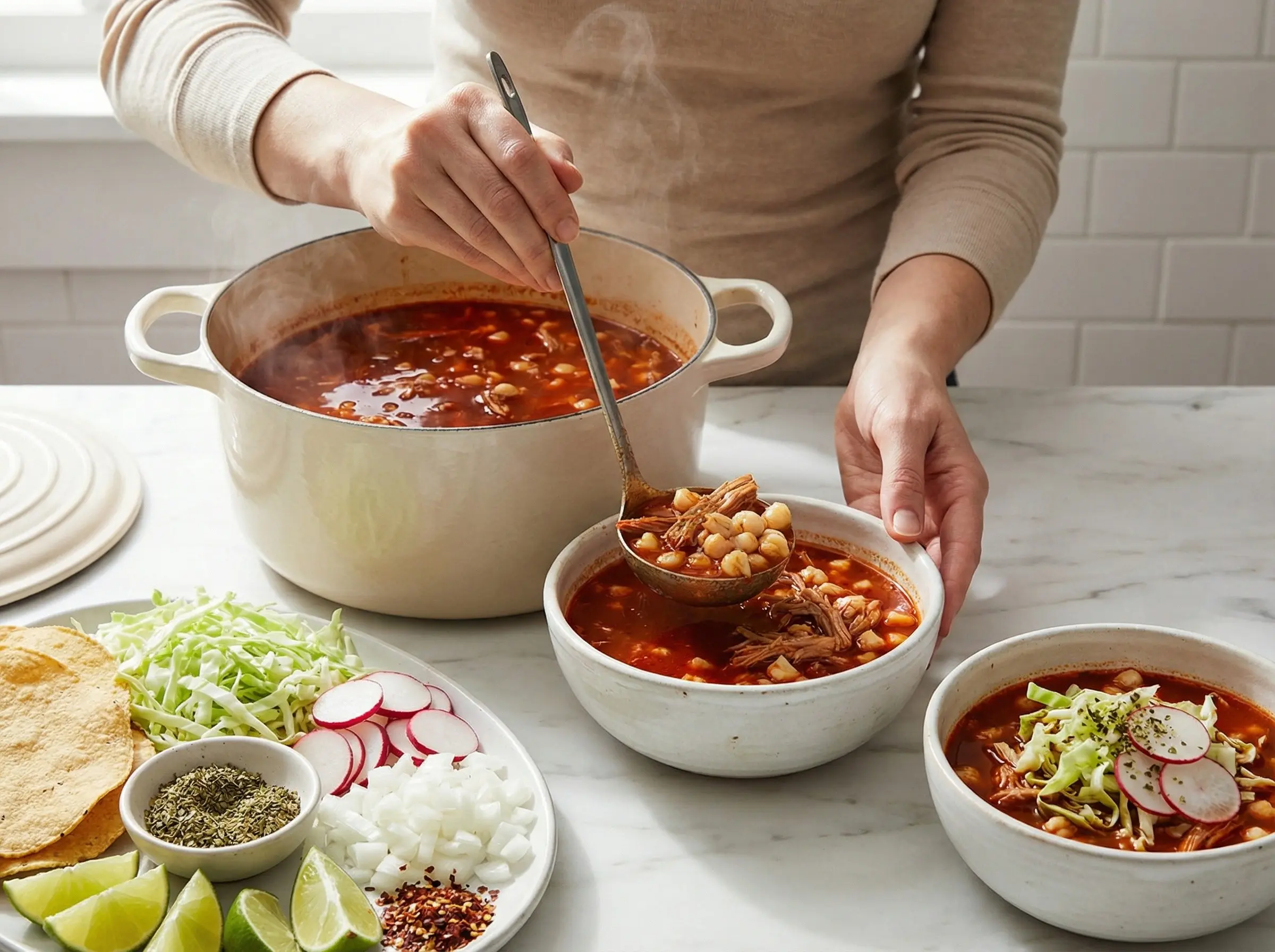
6While the pozole finishes cooking, prepare the garnish platter. Arrange on a large platter: finely shredded green cabbage, thinly sliced radishes, diced white onion, dried Mexican oregano in a small bowl, lime wedges, tostadas or tortilla chips, and crushed red chile flakes. These garnishes are essential to the pozole experience - each person customizes their bowl. Ladle the pozole into deep bowls, making sure each serving has plenty of pork, hominy, and broth. Serve immediately with the garnish platter in the center of the table. The traditional way to eat pozole is to add a generous handful of cabbage (it wilts slightly in the hot broth), several radish slices for crunch, diced onion for sharpness, a crumble of oregano, a big squeeze of lime, and as much chile as you can handle. Break tostadas into pieces and float them on top or eat on the side. Pozole tastes even better the next day after the flavors have melded further.


 Download