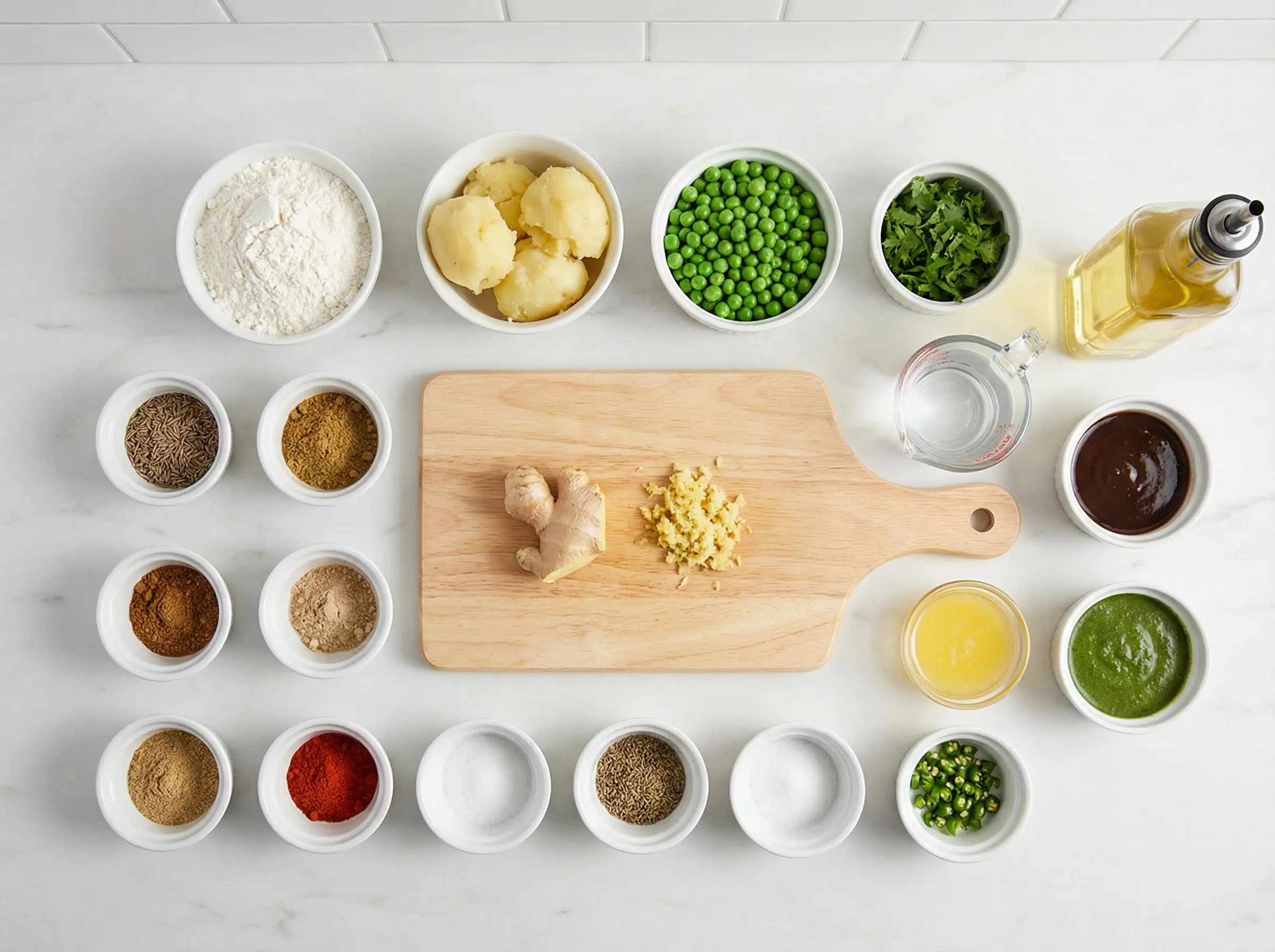
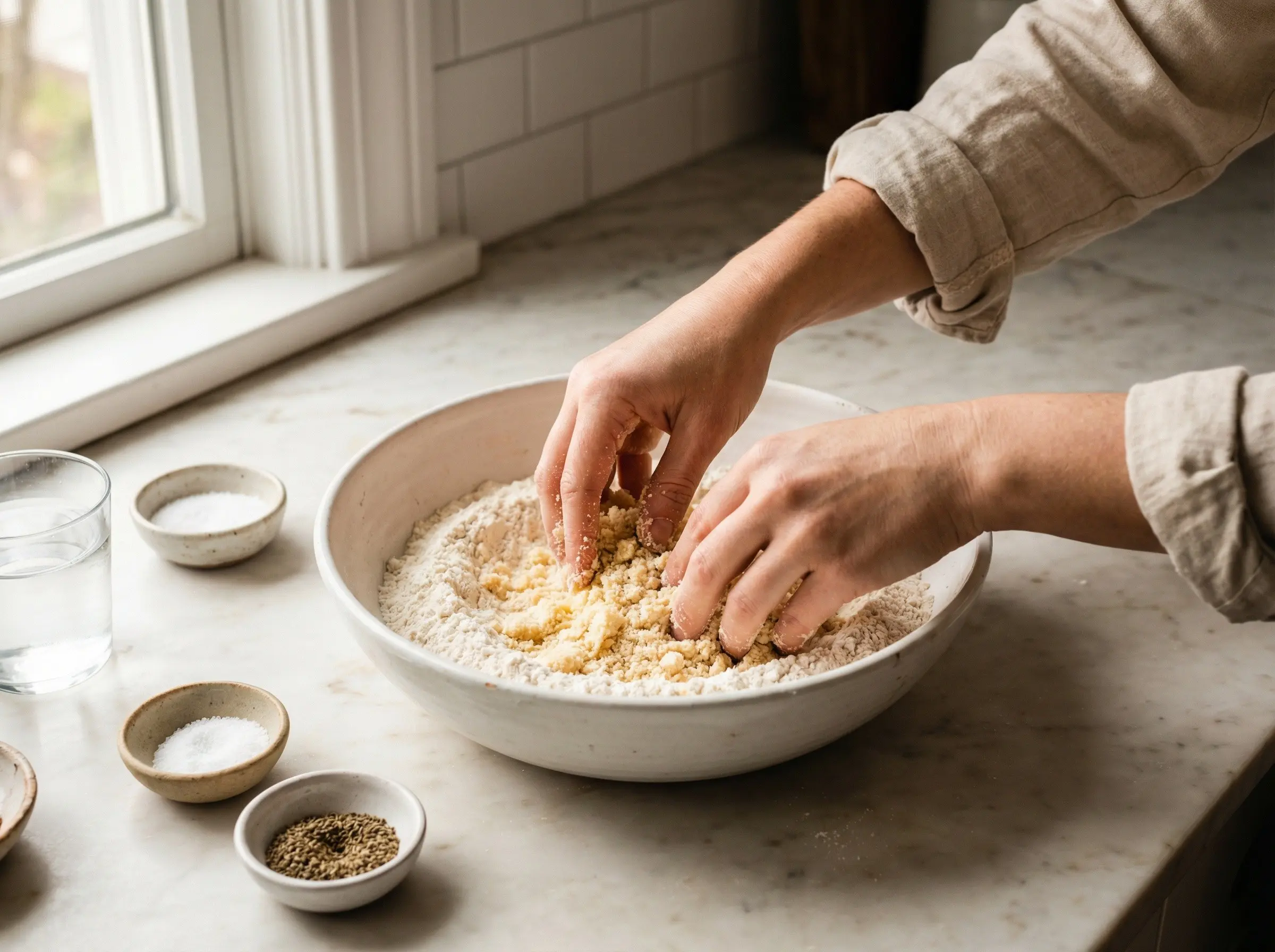
1Make the samosa dough. In a large bowl, combine the flour, salt, and ajwain seeds if using - ajwain adds a subtle thyme-like flavor traditional in many samosa recipes. Add the ghee or oil and rub it into the flour with your fingertips until the mixture resembles coarse breadcrumbs. Gradually add the cold water, mixing until a stiff dough forms. The dough should be firm, not soft or sticky - this is crucial for achieving flaky, crispy samosas. Knead the dough for 5-7 minutes until smooth and pliable. Cover with a damp cloth or plastic wrap and let rest for at least 30 minutes. This resting period allows the gluten to relax and makes the dough easier to roll.
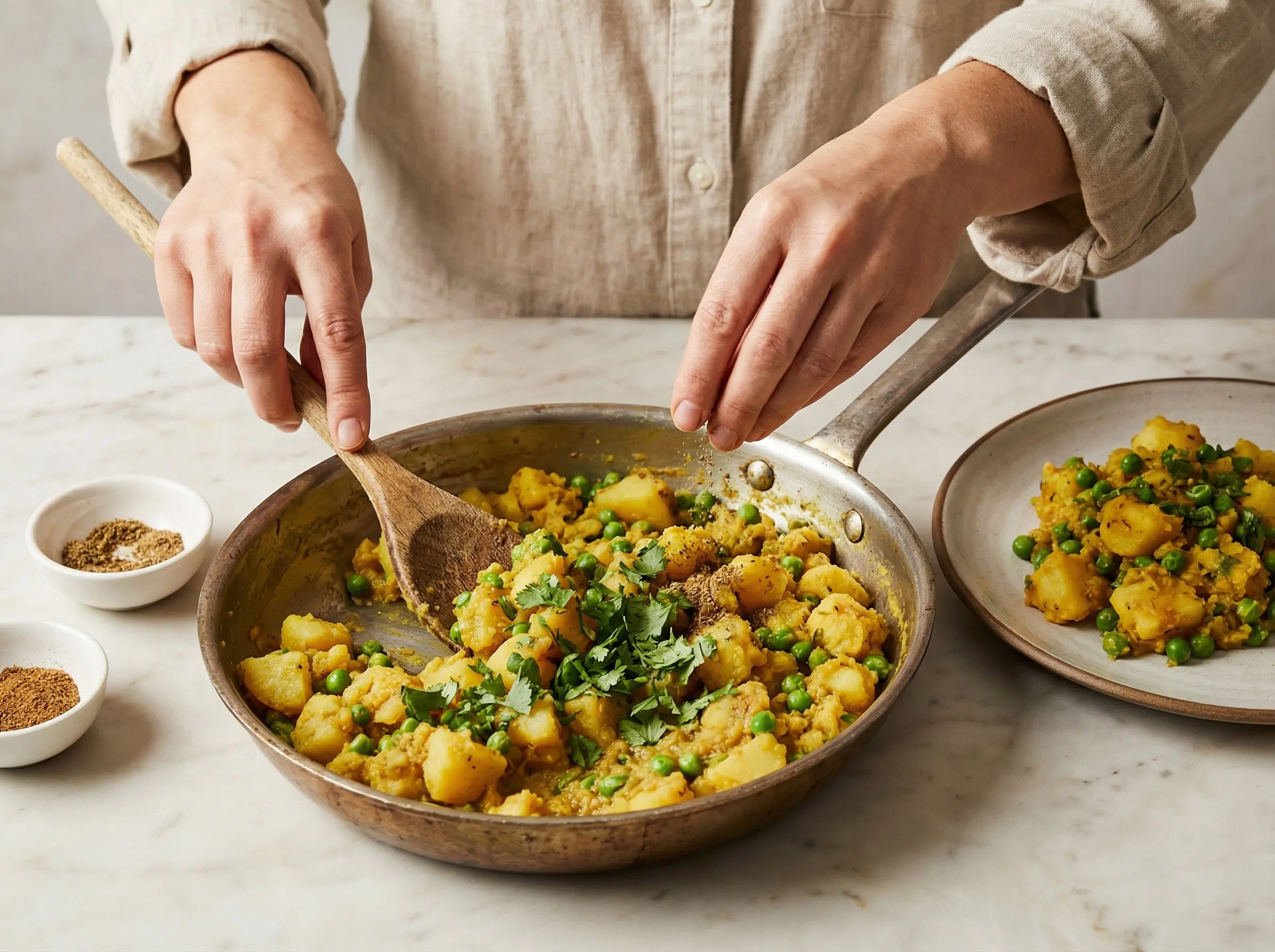
2Prepare the potato filling while the dough rests. Boil the potatoes until tender, then peel and mash them roughly - you want some texture, not a smooth puree. If using frozen peas, thaw them; fresh peas should be blanched briefly. Heat 3 tablespoons of oil in a large pan over medium heat. Add the cumin seeds and let them sizzle and pop for about 30 seconds until fragrant. Add the grated ginger and chopped green chilies, stirring for another 30 seconds. Add the mashed potatoes and peas, stirring to combine with the aromatics.
3Season the potato filling with coriander powder, garam masala, amchur powder (or lemon juice for tanginess), red chili powder, and salt. Stir well and cook for 3-4 minutes, allowing the spices to toast and meld with the potatoes. The filling should be well-seasoned and flavorful - taste and adjust as needed. Samosa filling should be bold since the pastry is plain. Remove from heat and stir in the fresh chopped cilantro. Transfer to a plate and spread out to cool completely. The filling must be completely cool before stuffing the samosas or it will make the dough soggy and difficult to work with.
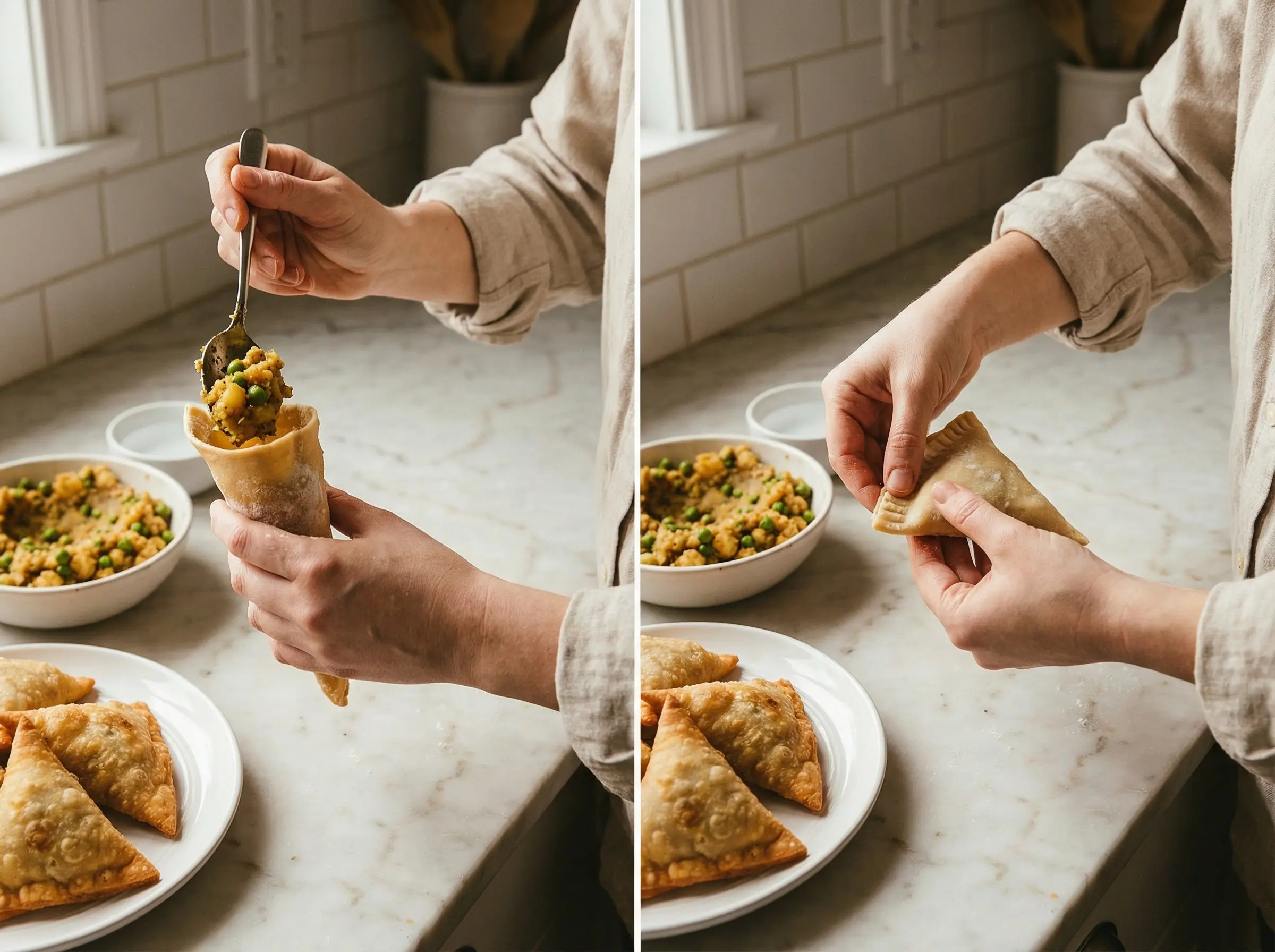
4Shape the samosas. Divide the rested dough into 8 equal portions and roll each into a smooth ball. Working with one ball at a time, roll it out on a lightly floured surface into an oval or circle about 6-7 inches in diameter and quite thin - about 1/16 inch. Cut the oval in half to create two semi-circles. Take one semi-circle and form a cone by folding one corner of the straight edge over to meet the middle, then overlapping the other corner on top. Press the seam firmly to seal, using a dab of water if needed. You should have a cone-shaped pocket. Hold the cone in your hand with the pointed end down.
5Fill and seal the samosas. Spoon about 2 tablespoons of the cooled potato filling into the cone, leaving about 1/2 inch at the top unfilled. Do not overfill or the samosas will burst during frying. Pinch the top edges together firmly to seal, pressing out any air pockets. You can crimp the edge with a fork or pinch it into a decorative pattern - the seal must be tight. Place the formed samosas on a baking sheet or plate. Repeat with the remaining dough and filling. You should get about 16 samosas. At this point, samosas can be covered and refrigerated for up to 24 hours, or frozen for up to 3 months before frying.
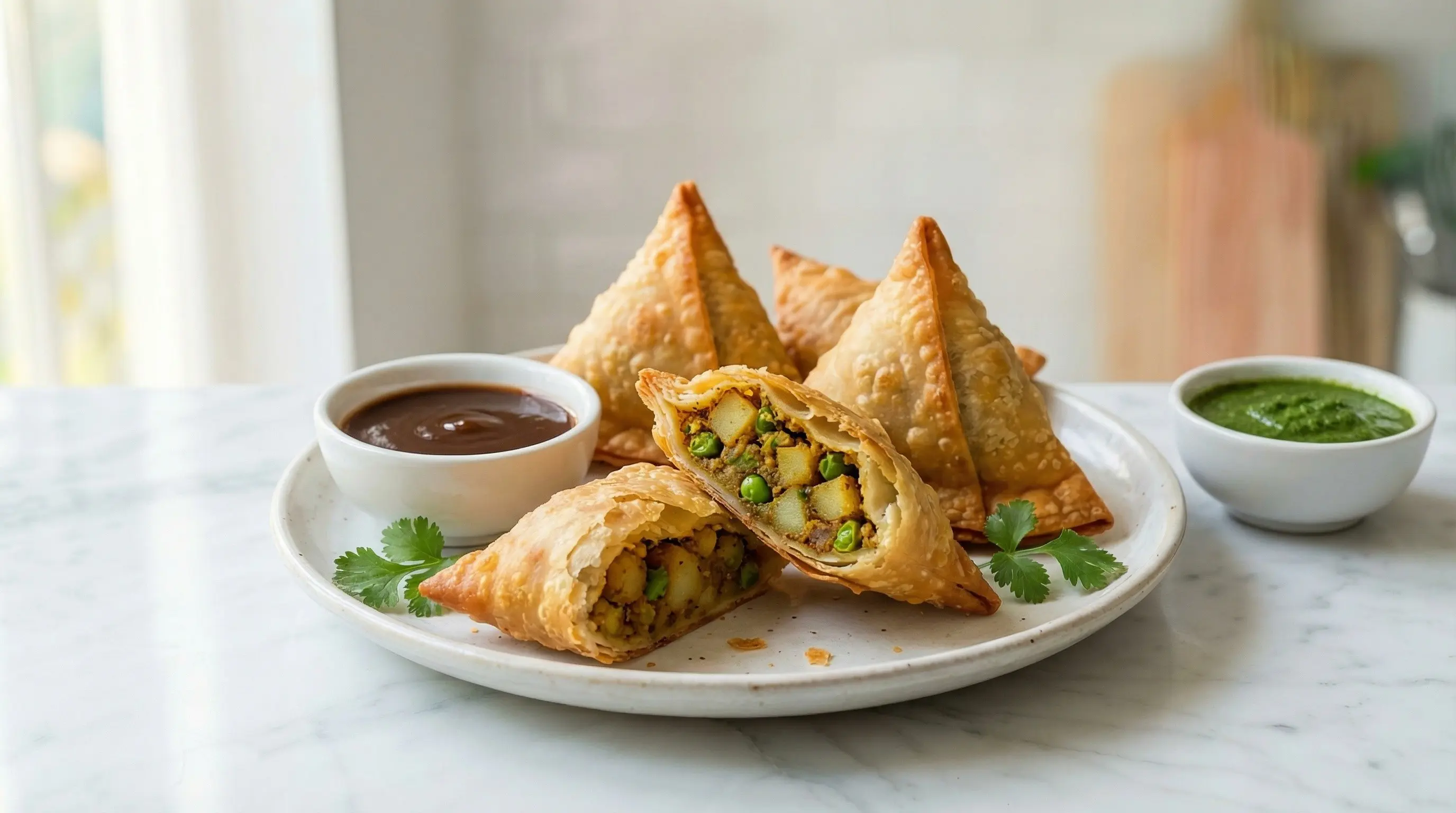
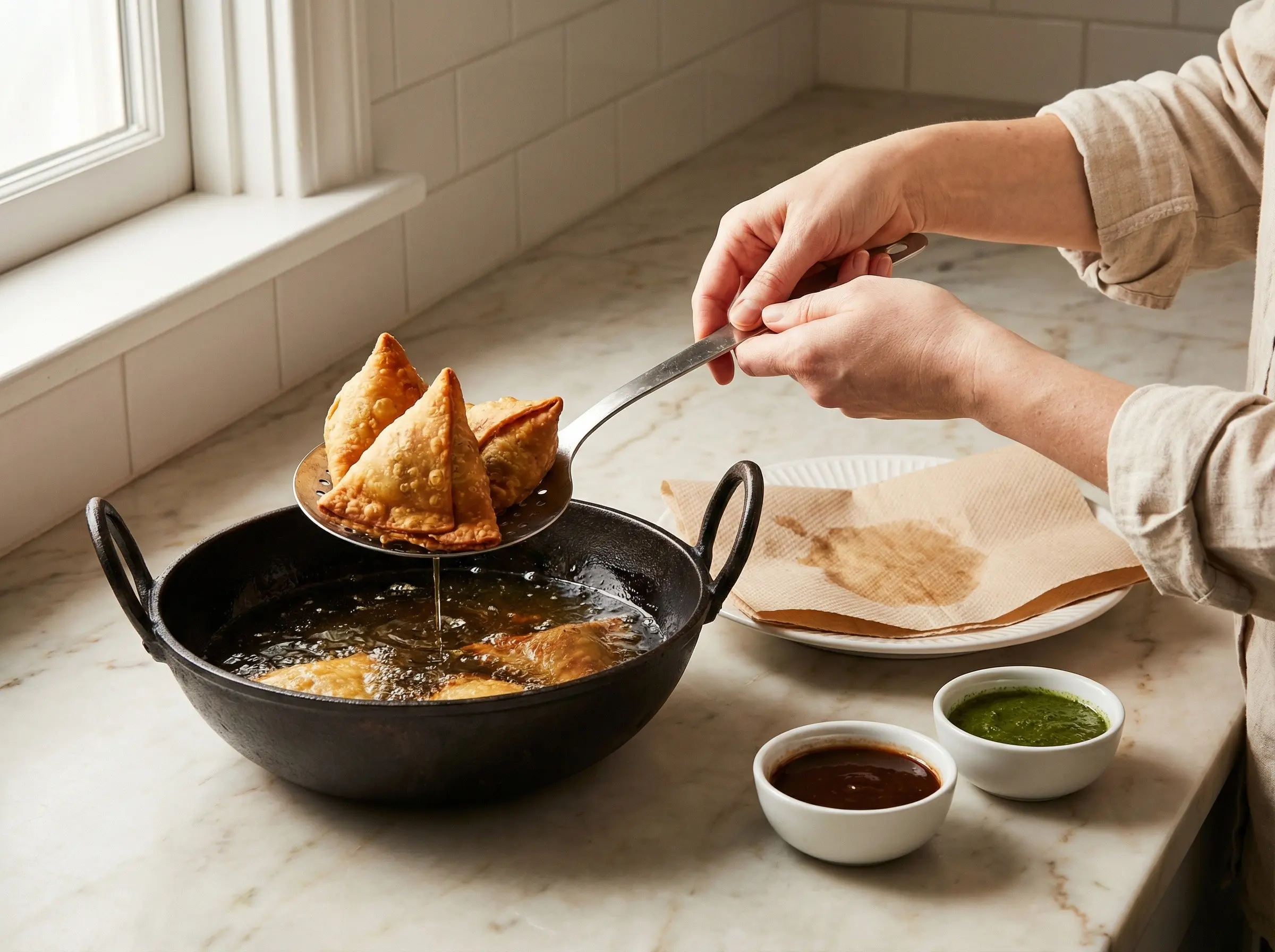
6Fry the samosas. Heat vegetable oil in a deep pot or kadai to 325-350 degrees F - this moderate temperature is essential. If the oil is too hot, the samosas will brown before cooking through and the pastry will not be flaky. If too cool, they will absorb excess oil. Test the temperature by dropping a small piece of dough into the oil - it should rise slowly with gentle bubbles. Carefully slide 3-4 samosas into the hot oil, being careful not to overcrowd. Fry for 8-10 minutes, turning occasionally, until deep golden brown and crispy on all sides. The low-and-slow frying method creates the characteristic flaky layers. Remove with a slotted spoon and drain on paper towels. Repeat with remaining samosas. Serve hot or warm with tamarind chutney (sweet and tangy) and green chutney (spicy and herbaceous) for dipping. Samosas can be kept warm in a low oven or reheated in a 375 degree F oven for 10 minutes to re-crisp.


 Download