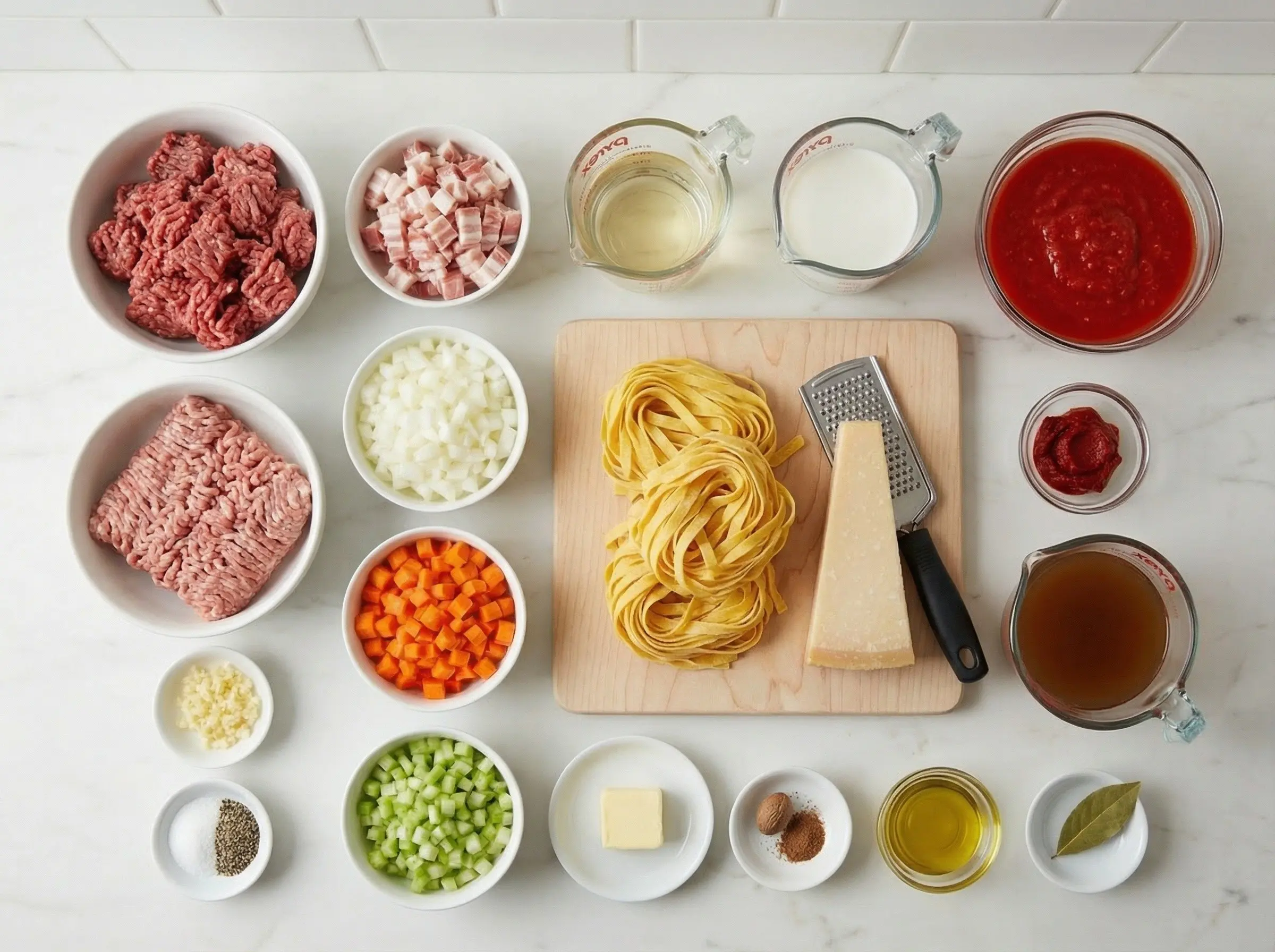
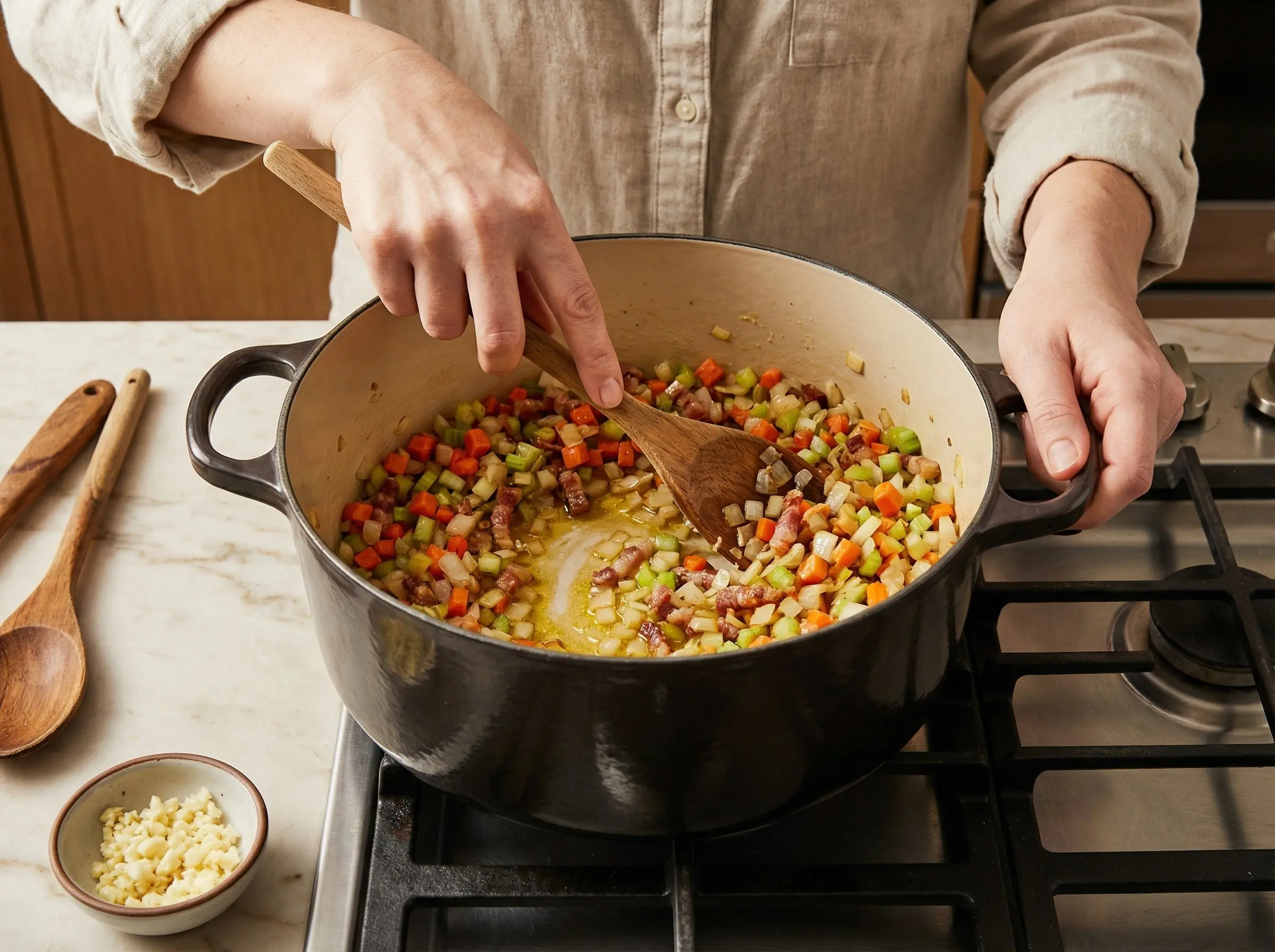
1Prepare the soffritto, the aromatic base of the ragu. Finely dice the onion, carrot, and celery into pieces no larger than 1/4 inch - this fine dice is important as the vegetables should almost dissolve into the sauce during the long cooking. The ratio of these three vegetables, called soffritto in Italian or mirepoix in French, is the foundation of countless dishes. In a large, heavy-bottomed pot or Dutch oven, heat the olive oil and butter over medium heat. Add the diced pancetta and cook for 5-6 minutes until it renders its fat and begins to crisp. Add the soffritto vegetables and cook, stirring occasionally, for 8-10 minutes until softened and lightly golden. Add the minced garlic and cook for another minute until fragrant.
2Add the ground beef and pork to the pot. Break the meat up with a wooden spoon and cook over medium-high heat for 8-10 minutes, stirring occasionally, until the meat is no longer pink and has begun to brown. Do not rush this step - you want the meat to develop some color and fond (the browned bits on the bottom of the pot), which adds tremendous depth of flavor. The meat should be in small crumbles, not large chunks. Season with salt, pepper, and nutmeg. The nutmeg is traditional and adds a subtle warmth that complements the richness of the meat and dairy.
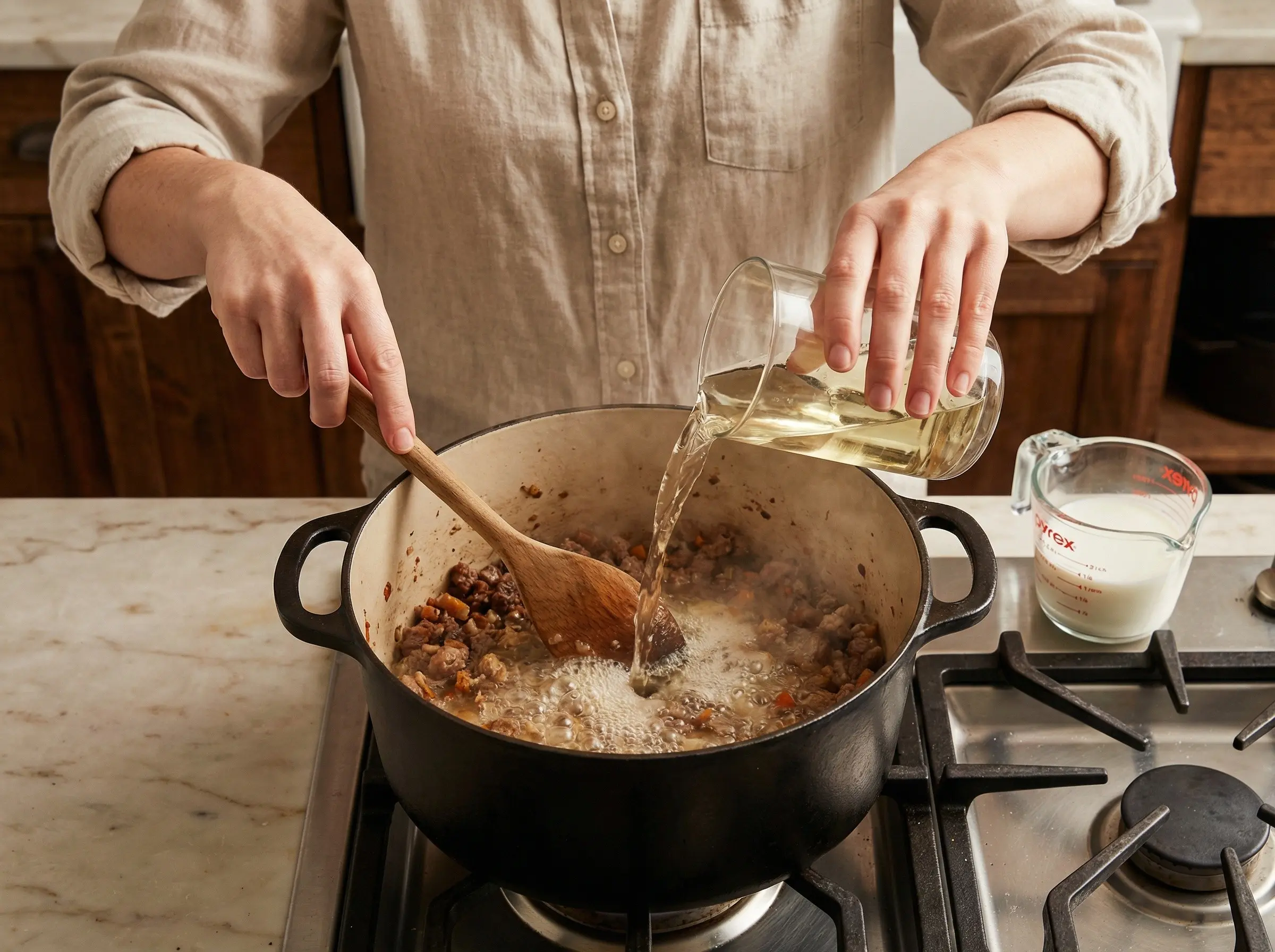
3Pour in the white wine, stirring and scraping up any browned bits from the bottom of the pot. Let the wine simmer vigorously until it has almost completely evaporated, about 5-7 minutes. This step is crucial - the wine must cook off completely or the sauce will taste acidic and harsh. You should hear the sizzling return as the liquid evaporates. Next, add the milk and stir well. Again, let the milk simmer gently until it has been mostly absorbed by the meat, about 10-15 minutes. The milk tenderizes the meat and adds a subtle sweetness and silky texture to the final sauce. This addition of milk may seem unusual but is absolutely traditional and essential to authentic bolognese.
4Add the crushed tomatoes, tomato paste, beef stock, and bay leaf. Stir well to combine. Notice how the tomato is not the dominant ingredient - it should complement the meat, not overpower it. Bring the sauce to a gentle simmer, then reduce the heat to the lowest setting. The sauce should barely bubble - just an occasional lazy blip breaking the surface. Cover the pot with the lid slightly ajar to allow some evaporation. Simmer for a minimum of 3 hours, stirring occasionally to prevent sticking. Four hours or more is even better. The long, slow cooking is what transforms the sauce from good to transcendent - the meat breaks down, the flavors meld, and the sauce becomes rich and cohesive.
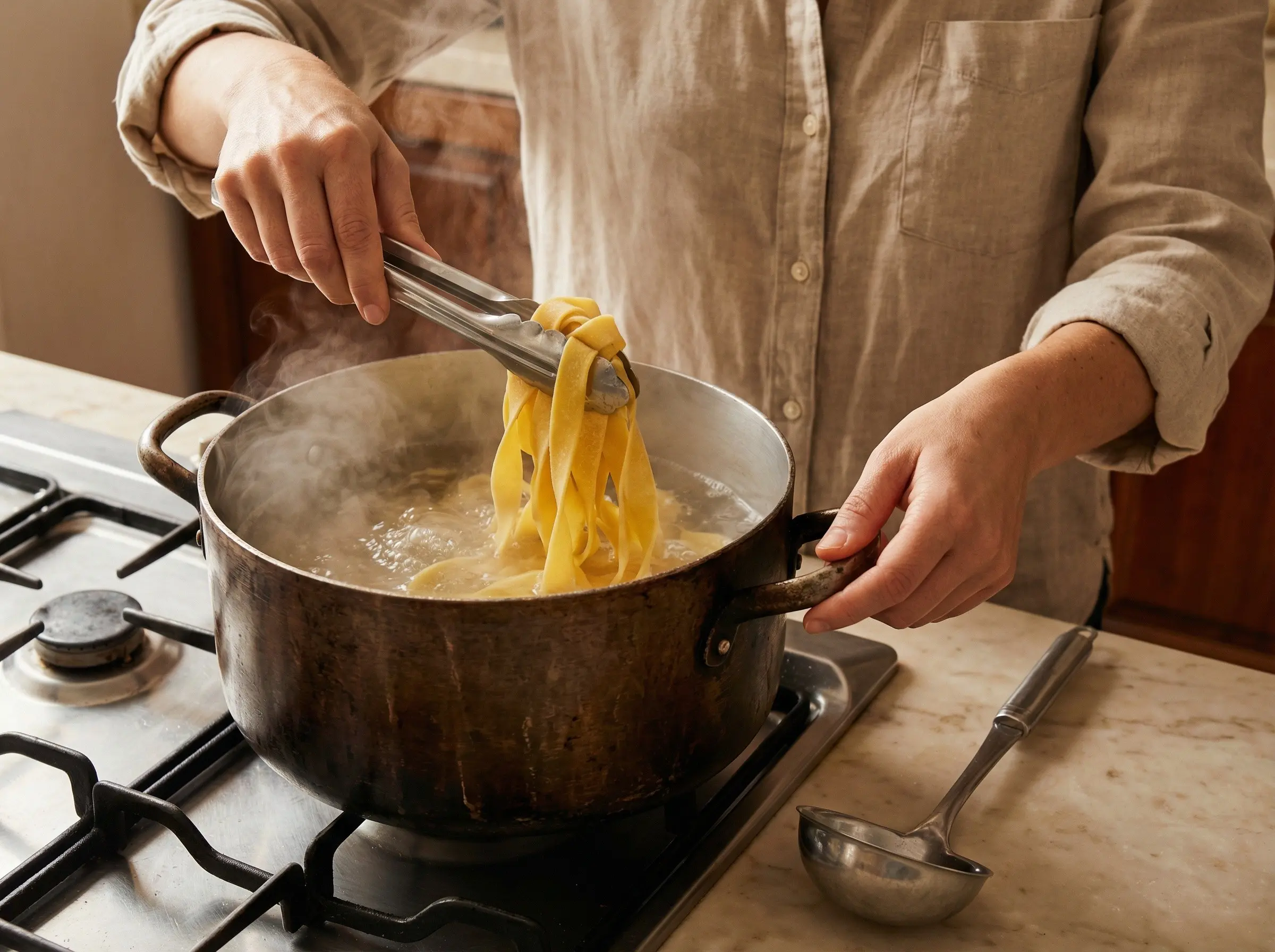
5After several hours of simmering, the ragu should be rich, thick, and deeply flavored. The fat will have risen to the surface in orange pools - do not skim this off, as it carries tremendous flavor. Remove the bay leaf. Taste and adjust seasoning with salt and pepper as needed. The sauce can be made up to 4 days ahead and refrigerated, or frozen for up to 3 months - many argue it improves with a day or two of rest. When ready to serve, bring a large pot of water to a rolling boil and salt it generously - it should taste like the sea. Cook the fresh tagliatelle for 2-3 minutes (or dried pasta according to package directions minus 1 minute) until al dente.
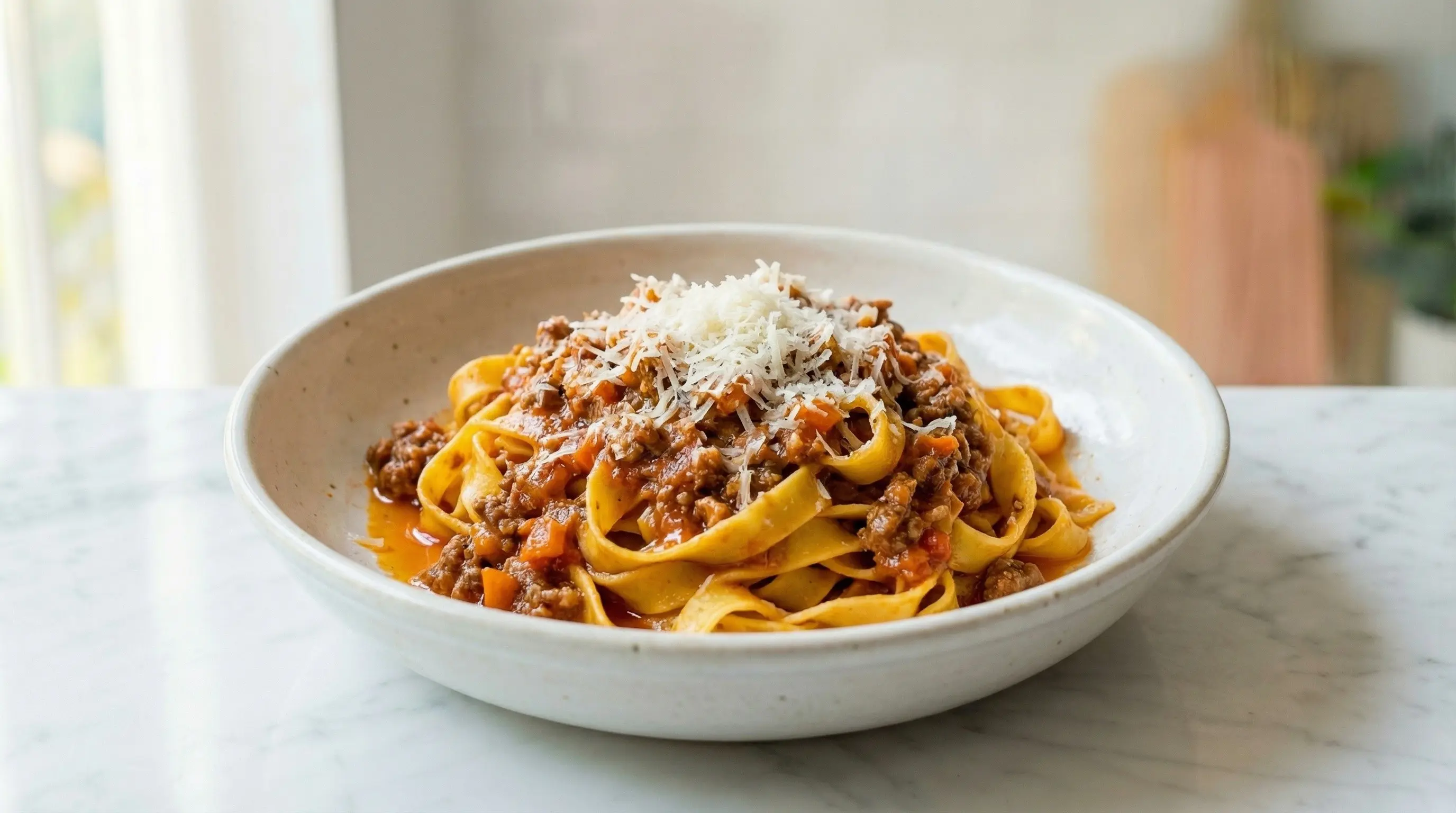
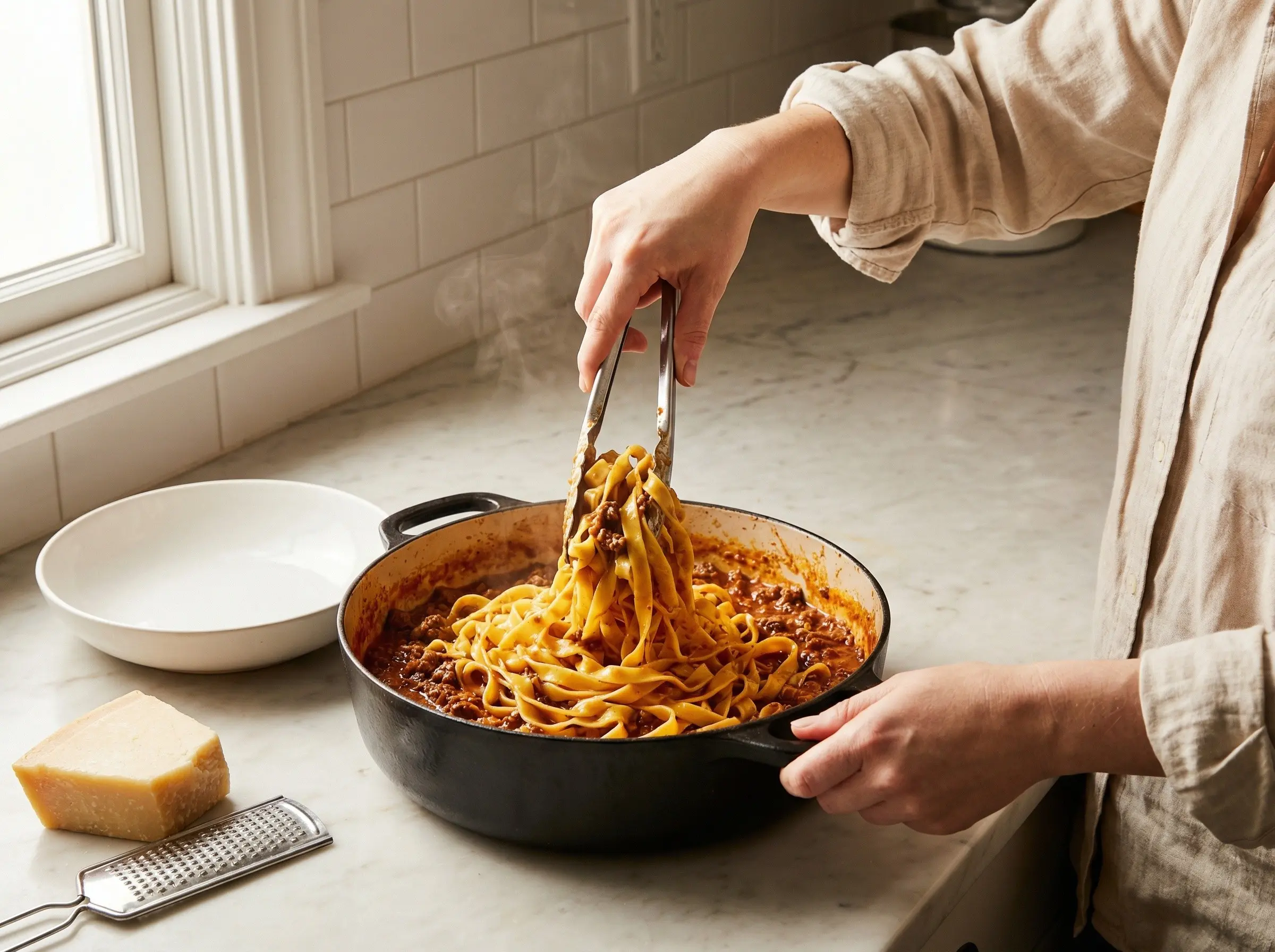
6Reserve 1 cup of pasta cooking water before draining the tagliatelle. Add the drained pasta directly to the pot of ragu over low heat. Toss vigorously for 1-2 minutes, adding splashes of pasta water as needed, until every ribbon of tagliatelle is coated in the rich meat sauce. The starchy pasta water helps the sauce cling to the pasta and creates a glossy, cohesive dish. The final result should not be pasta with sauce on top, but rather pasta and sauce completely united. Serve immediately in warm bowls, topped with freshly grated Parmigiano-Reggiano. In Bologna, the cheese is mandatory but used sparingly - a light shower, not a blanket. Additional butter stirred in at the end is also traditional for extra richness. Serve with crusty bread to mop up every last bit of sauce and a robust red wine from Emilia-Romagna such as Sangiovese or Lambrusco.


 Download