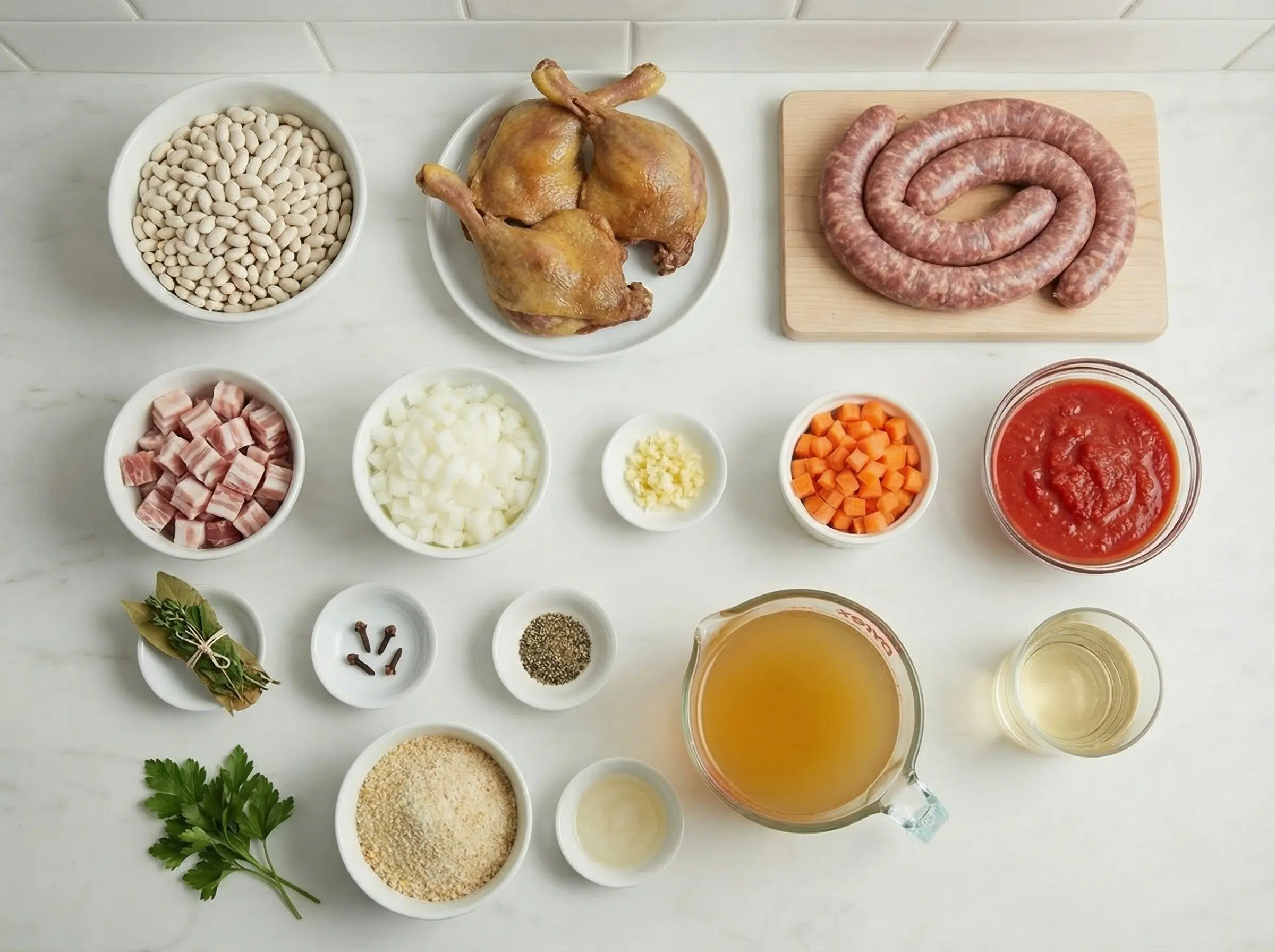
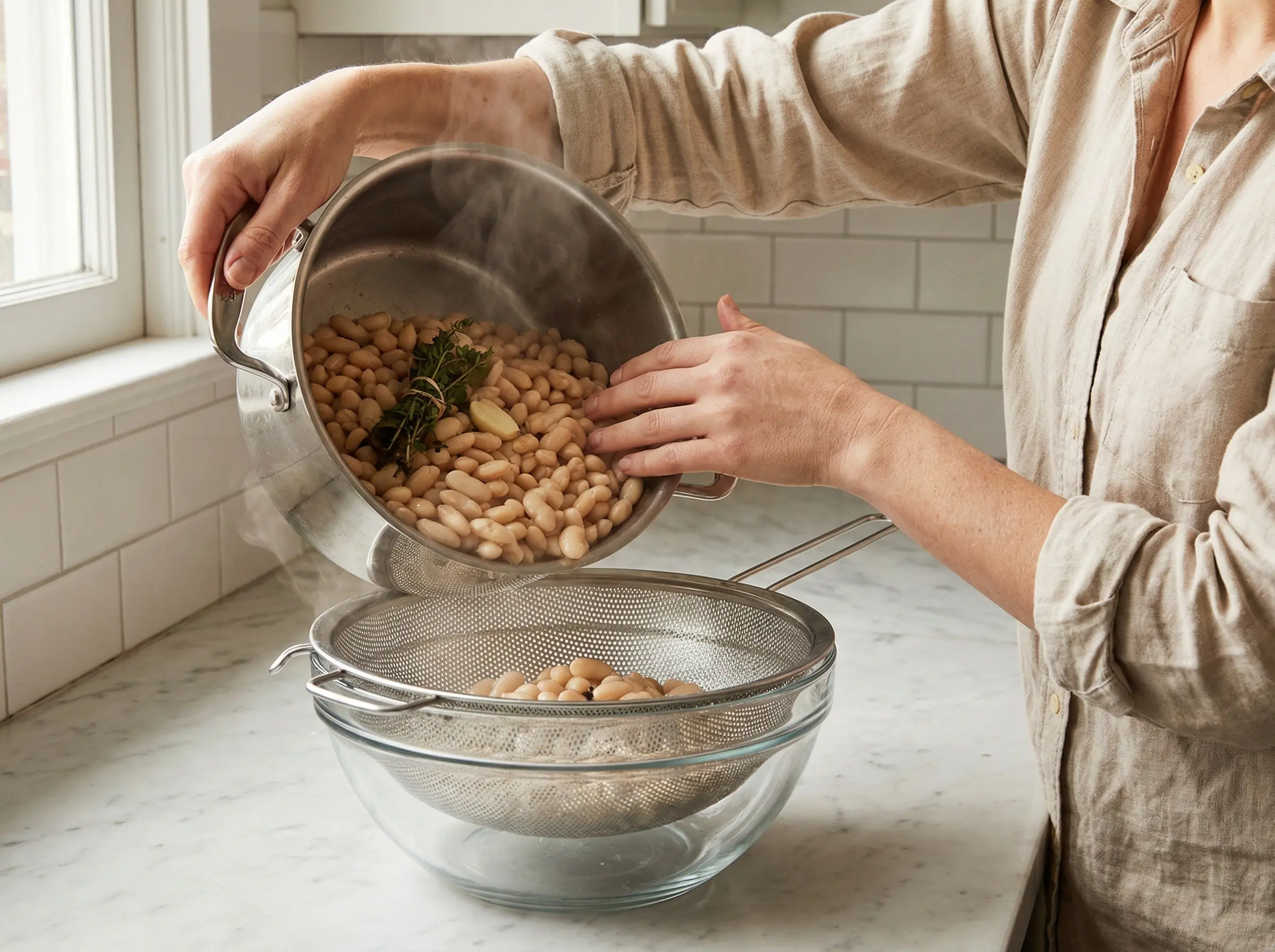
1The night before cooking, place the dried beans in a large bowl and cover with plenty of cold water - at least 3 inches above the beans. Let soak for 12-24 hours at room temperature. If using very salty salt pork, soak it separately overnight as well, changing the water once. The next day, drain the beans and place them in a large pot. Cover with fresh cold water by 2 inches. Add the bouquet garni (tie together sprigs of thyme, a bay leaf, and parsley stems with kitchen twine), whole cloves, and half the diced onion. Bring to a boil, then reduce heat and simmer gently for 45 minutes to 1 hour until the beans are tender but not falling apart - they should still hold their shape. Drain the beans, reserving the cooking liquid. Discard the bouquet garni and cloves.
2While the beans cook, prepare the meats. Remove the duck confit legs from their fat, scraping off excess fat and reserving it for later use. If the duck is cold, the meat may be firm - you can gently warm the legs in a low oven to make them easier to handle. Cut or pull each leg into 2-3 large pieces, keeping some meat on the bone for presentation. In a large skillet over medium heat, brown the Toulouse sausages on all sides until golden, about 8-10 minutes. They do not need to be cooked through as they will finish in the oven. Remove and slice into 2-inch pieces. In the same skillet, cook the diced salt pork or pancetta until golden and crispy, about 6-8 minutes. Remove and set aside, leaving the rendered fat in the pan.
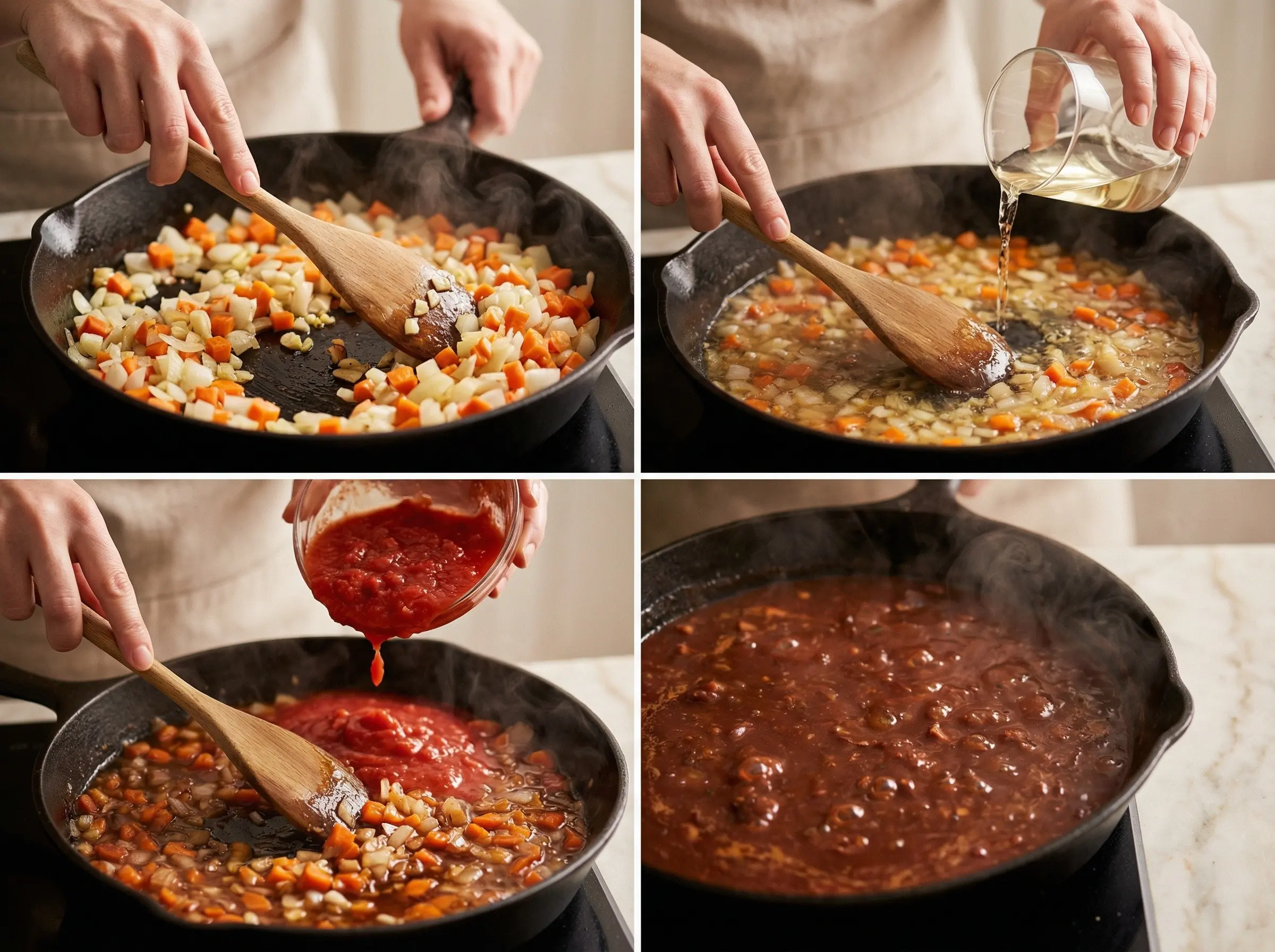
3In the same skillet with the rendered pork fat, add the remaining diced onion and the carrots. Cook over medium heat for 5-6 minutes until softened. Add the minced garlic and cook for another minute until fragrant. Pour in the white wine, scraping up any browned bits from the bottom of the pan. Let the wine reduce by half, about 3-4 minutes. Add the crushed tomatoes, chicken stock, and black pepper. Stir to combine and simmer for 10 minutes until slightly thickened. This tomato-wine mixture will become the braising liquid for the cassoulet. Taste and adjust seasoning - be cautious with salt as the pork and duck confit add saltiness.
4Preheat your oven to 300 degrees F. Choose a large, deep earthenware cassole or Dutch oven - the traditional vessel is wide and shallow to maximize the crust-to-bean ratio. Spread about one-third of the cooked beans in the bottom of the dish. Layer half of the salt pork, half of the sausage pieces, and half of the duck confit on top of the beans. Add another third of the beans, then the remaining meats. Finish with the final third of beans. Pour the tomato-wine braising liquid over everything. Add enough reserved bean cooking liquid to just cover the beans - you should see liquid peeking through but the beans should not be swimming. The mixture will reduce during the long baking.
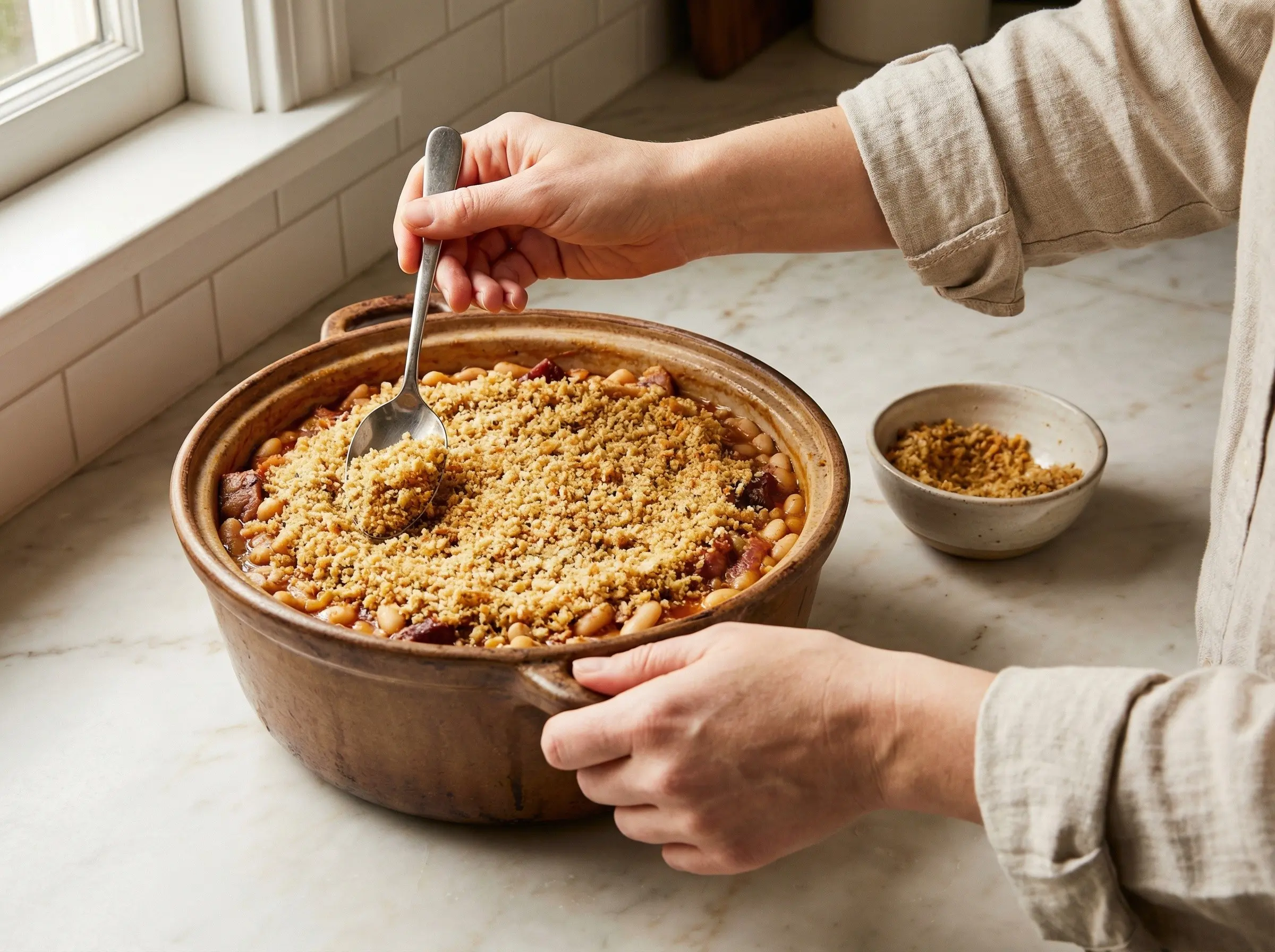
5Mix the fresh breadcrumbs with 2 tablespoons of the reserved duck fat or melted butter. Spread this mixture evenly over the top of the cassoulet. Place the cassoulet in the oven uncovered and bake for 2 to 3 hours. Here is the traditional technique: as the cassoulet bakes, a golden crust will form on top. When this happens (usually after about 45 minutes to 1 hour), use a large spoon to gently break the crust and press it down into the beans. This incorporates the flavorful crust into the dish. Allow another crust to form and repeat this process - traditionalists insist on breaking the crust seven times, though 3-4 times is more practical. Each time, add a splash of bean cooking liquid if the cassoulet looks dry.
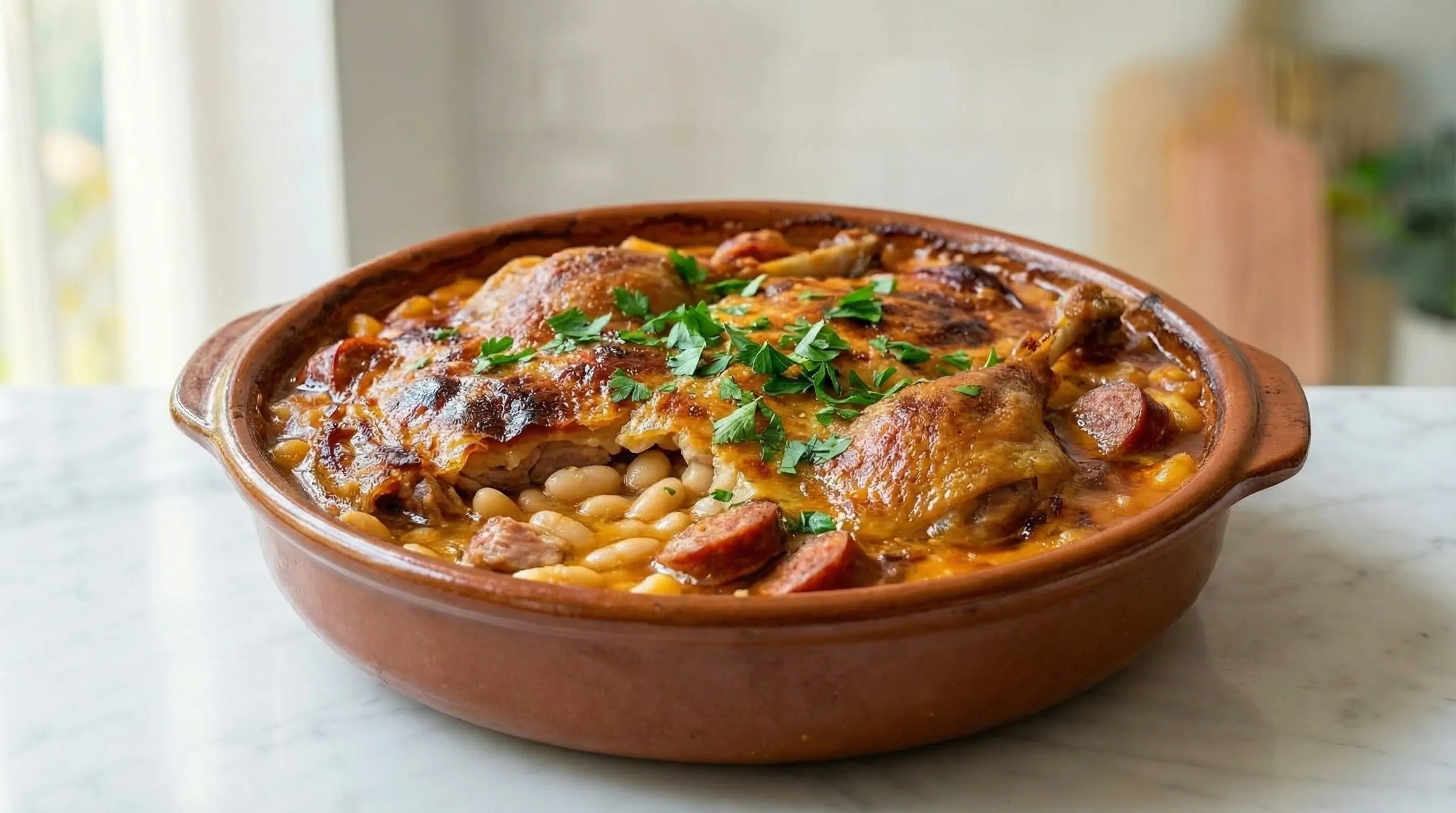
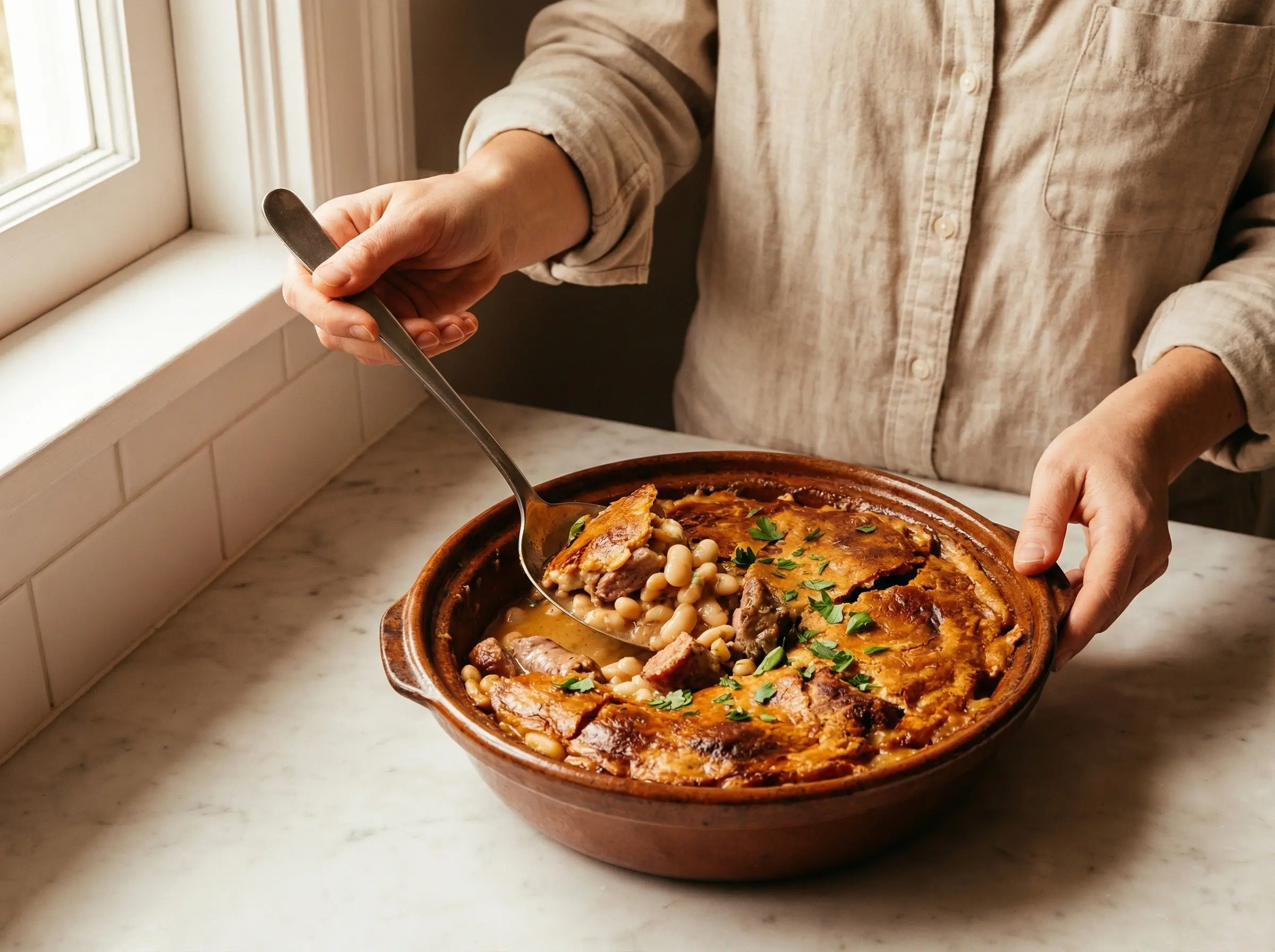
6After the final crust has formed and turned deep golden brown, remove the cassoulet from the oven. The top should be beautifully burnished and crispy, the beans underneath creamy and rich, and the meats falling-apart tender. Let the cassoulet rest for 15-20 minutes before serving - it will be extremely hot and the rest allows the flavors to settle. Drizzle the remaining duck fat over the crust if desired for extra richness. Serve directly from the cassole, scooping deep to get beans, meat, and crust in each portion. Garnish with fresh parsley. Cassoulet is traditionally served with a simple green salad dressed with sharp vinaigrette to cut the richness, and plenty of crusty bread. A robust red wine from the Languedoc region is the classic pairing. Cassoulet tastes even better reheated the next day - the flavors continue to develop and deepen. Refrigerate for up to 5 days and reheat in a 325 degree F oven until bubbling, adding a splash of stock if needed.


 Download