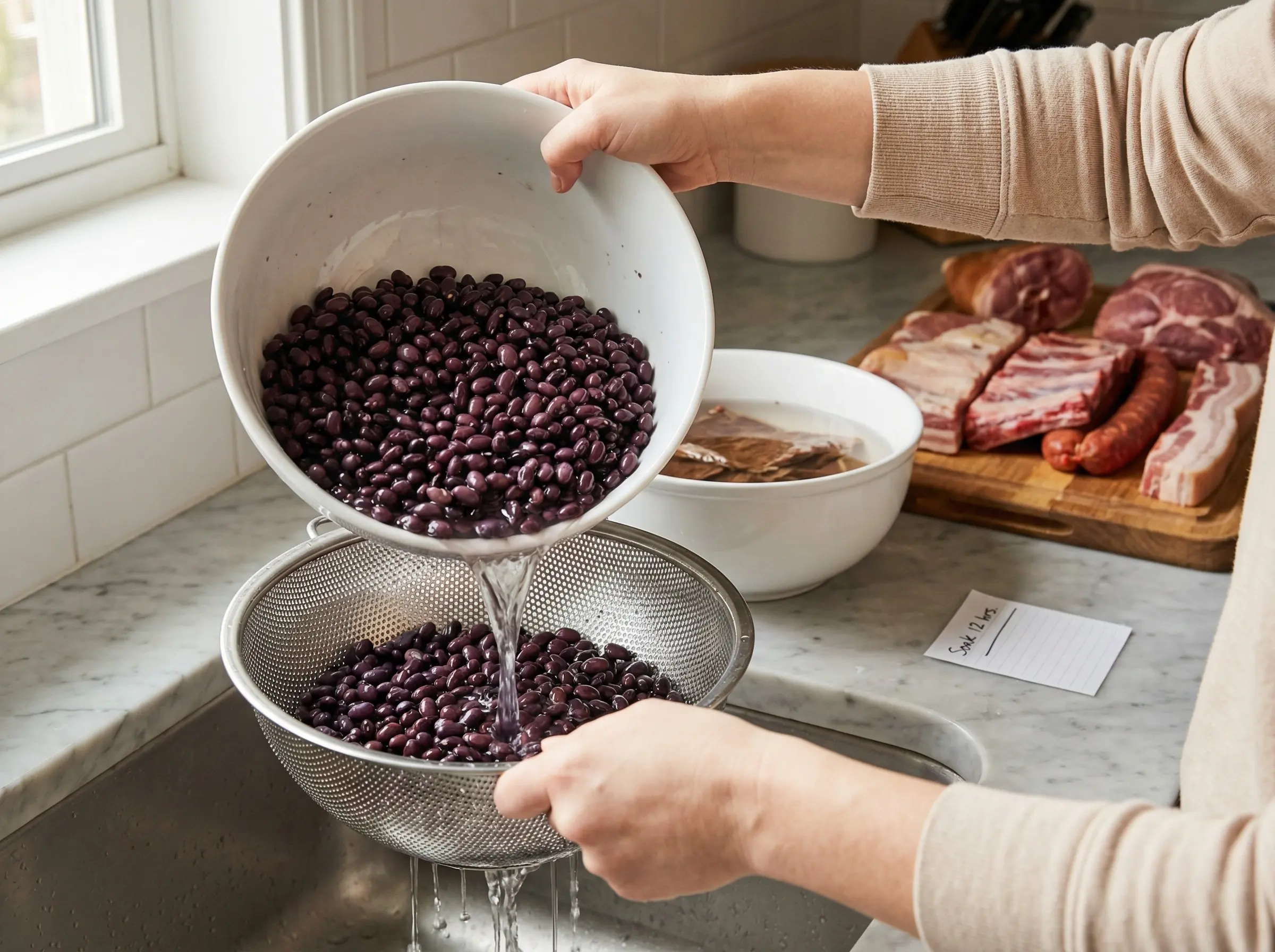
1Prepare the beans and meats the night before. Place the dried black beans in a large bowl, cover with several inches of cold water, and soak overnight (at least 8 hours). The beans will double in size. If using carne seca (dried salted beef), soak it separately in cold water overnight as well, changing the water 2-3 times to remove excess salt. If your smoked meats are particularly salty, you can blanch them briefly in boiling water and discard the water to reduce saltiness. Drain the soaked beans and set aside.
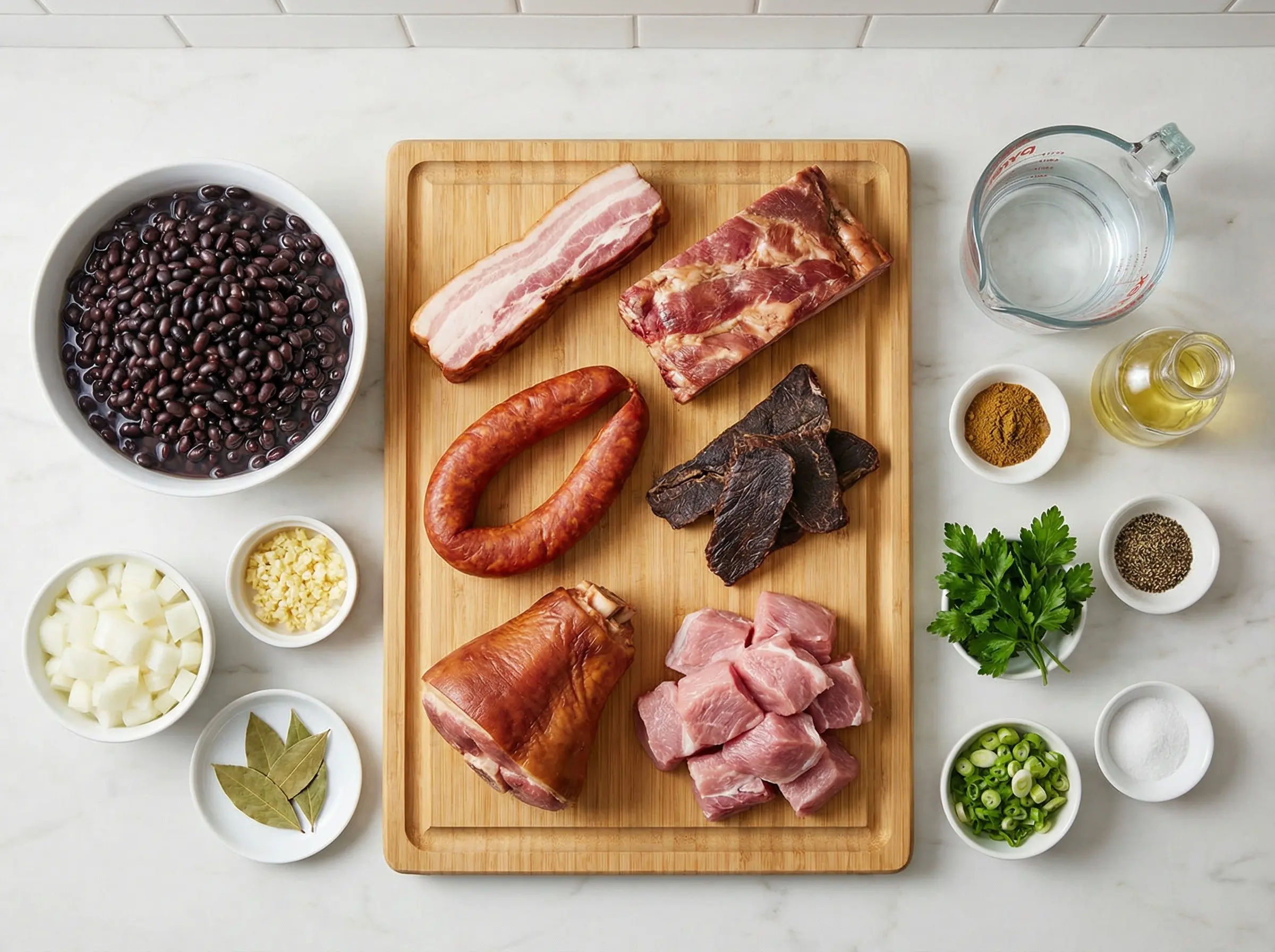
2Cut the meats into appropriate sizes. Cut the slab bacon into 1-inch chunks. Separate the smoked ribs into individual ribs or cut into 2-inch pieces. Slice the linguiça into 1-inch rounds. Cut the pork shoulder into 2-inch chunks. Leave the ham hock whole - it will fall apart during cooking. If using carne seca, cut it into 2-inch pieces. Having different cuts and sizes of meat creates variety in texture and allows the smoky flavors to infuse the beans differently.
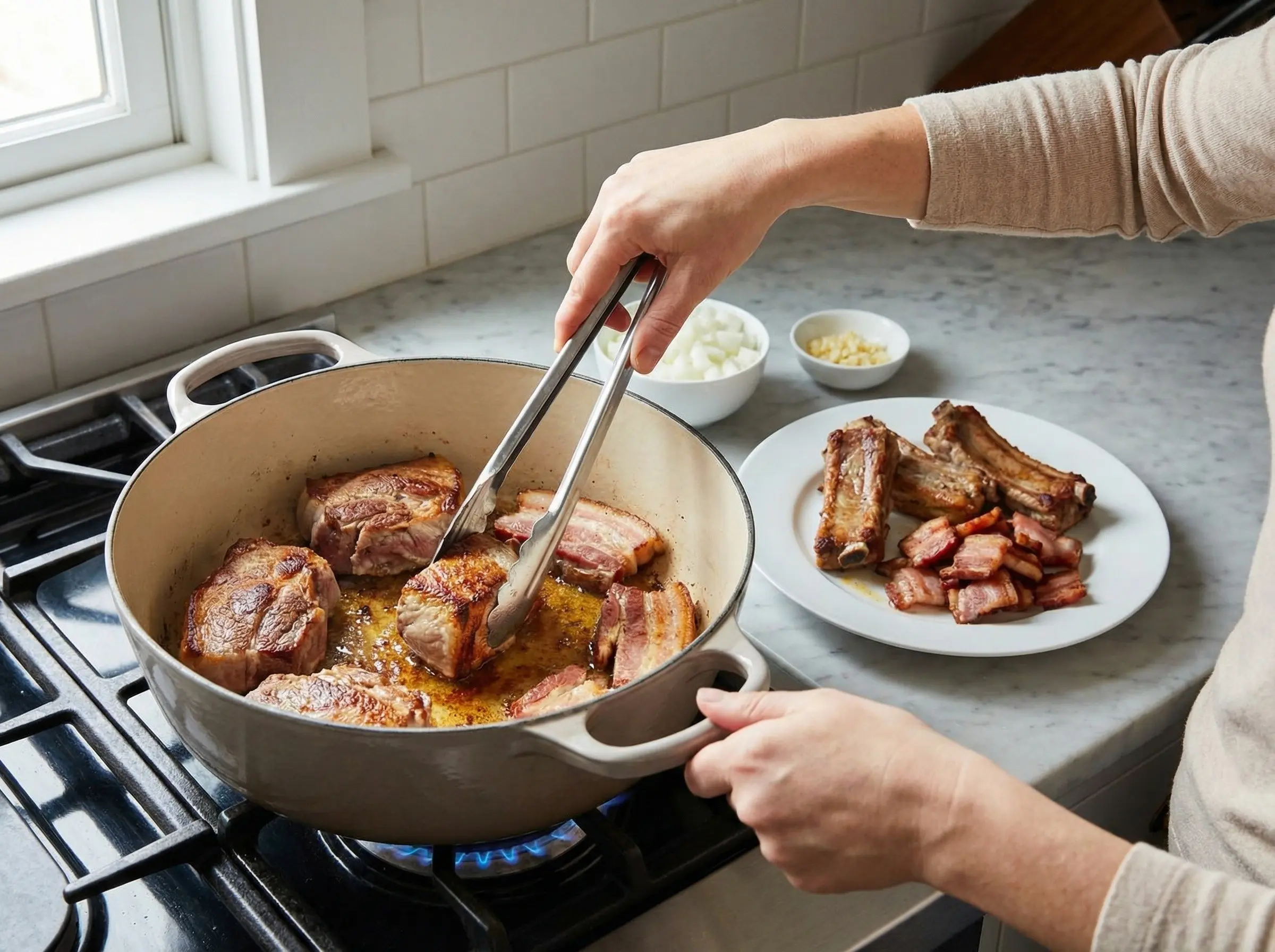
3In a very large Dutch oven or heavy pot (at least 8 quarts), heat the vegetable oil over medium-high heat. Working in batches, brown the bacon, pork shoulder, and ribs on all sides, about 3-4 minutes per batch. This browning step builds tremendous flavor through the Maillard reaction. Transfer the browned meats to a plate. Add the diced onion to the pot and sauté in the rendered fat for 5-6 minutes until softened and golden. Add the minced garlic and cook for another minute until fragrant.
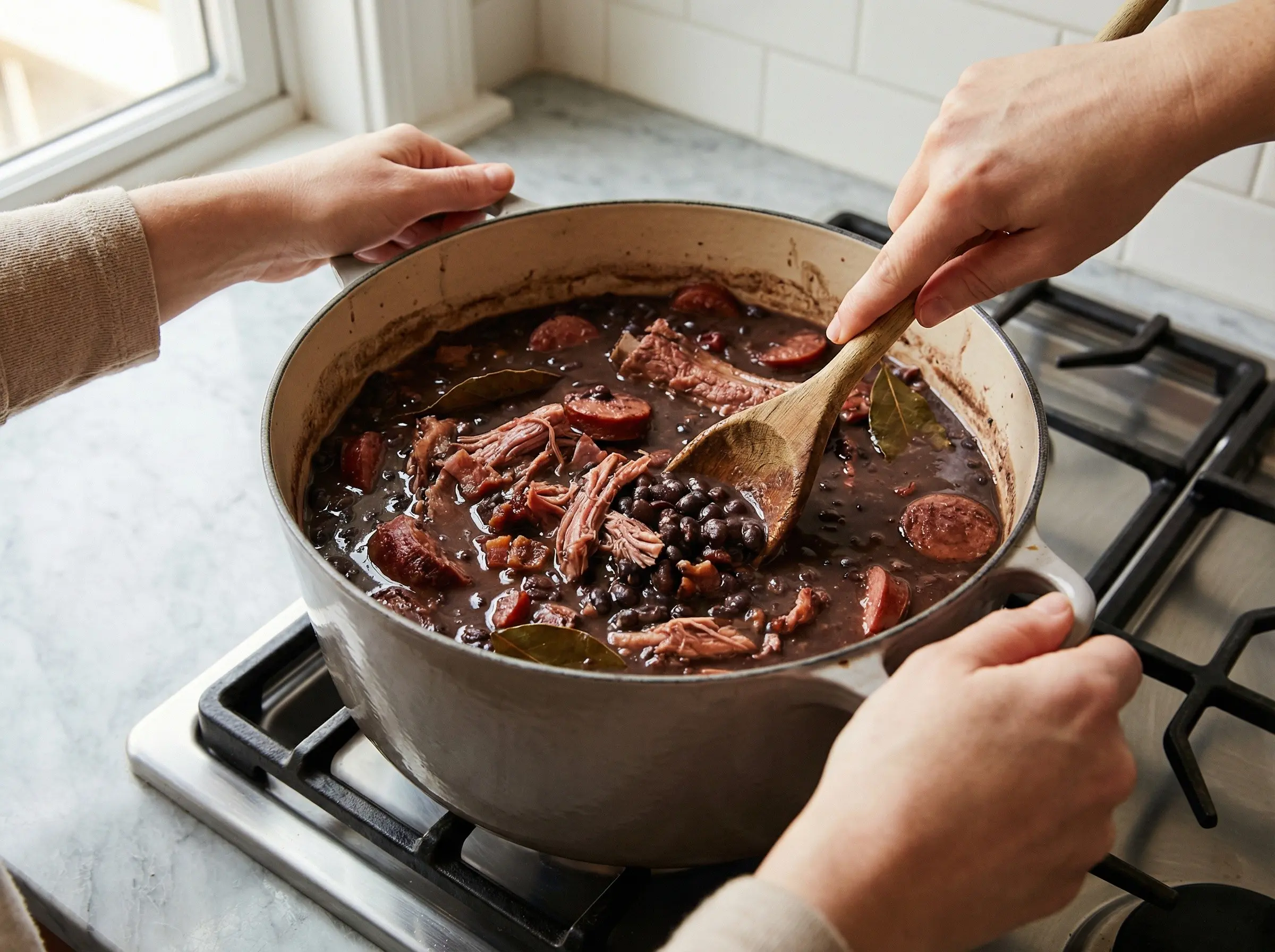
4Return all the browned meats to the pot. Add the ham hock, linguiça, and carne seca if using. Add the drained black beans, bay leaves, cumin, and black pepper. Pour in enough water to cover everything by about 2 inches (approximately 6-8 cups). Do not add salt yet - the smoked and cured meats will release salt during cooking. Bring to a boil over high heat, then reduce the heat to low. Cover and simmer gently for 2 to 2.5 hours, stirring occasionally and adding more water if needed to keep everything submerged.
5After about 2 hours, the beans should be completely tender and beginning to break down, creating a thick, creamy sauce. The meats should be falling-off-the-bone tender. Remove the ham hock and shred the meat, discarding the skin and bones, then return the shredded meat to the pot. For a creamier consistency (traditional style), remove about 1 cup of beans and mash them with a fork or blend briefly, then stir them back into the pot. This thickens the broth into a rich, velvety sauce. Taste and add salt if needed - start with a little as the meats have contributed significant saltiness.
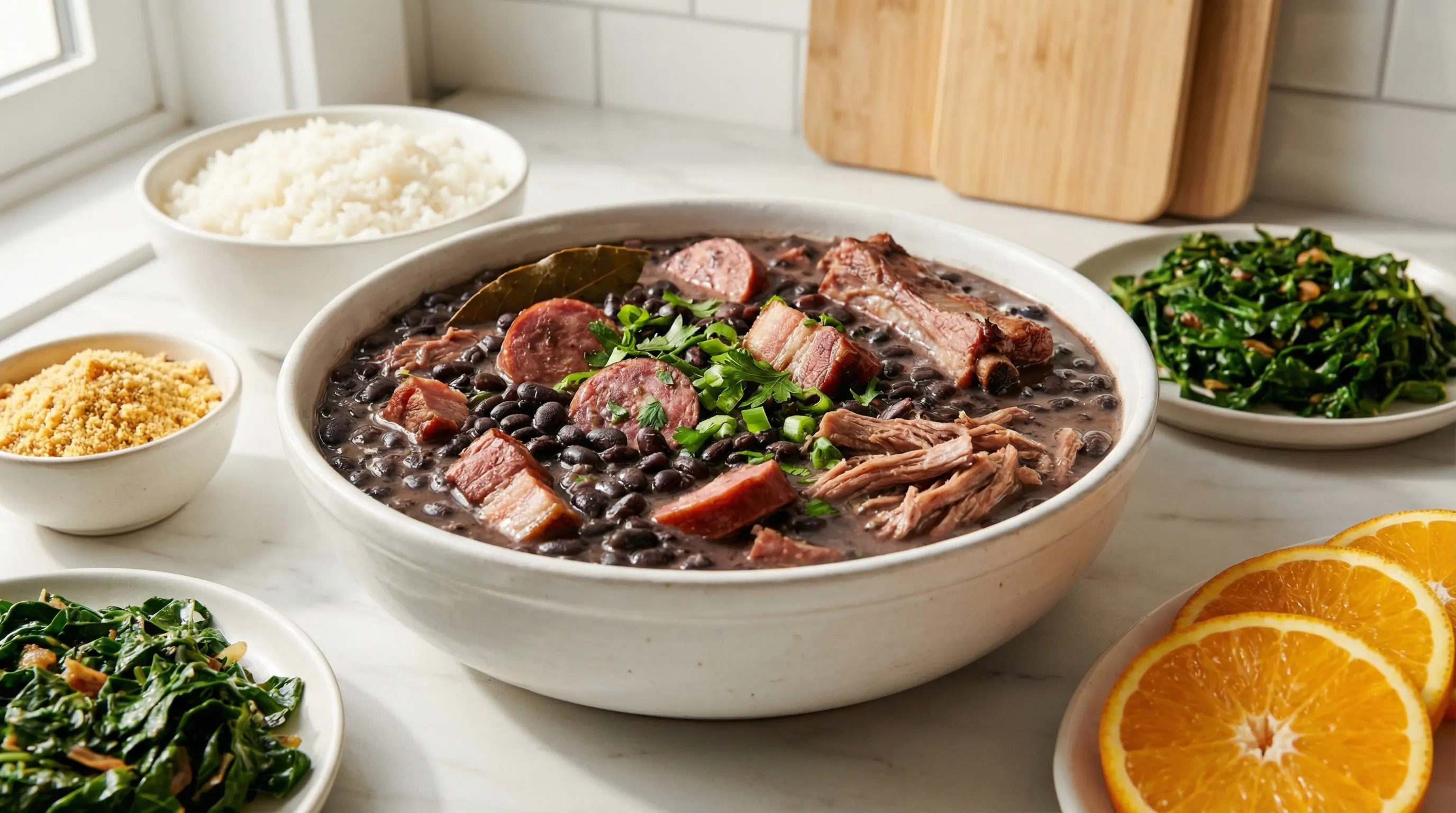
6Serve the feijoada in the traditional Brazilian style as a complete spread. Ladle the beans and meats into deep bowls or onto plates alongside fluffy white rice - the rice is essential for soaking up the rich, flavorful broth. Accompany with farofa (toasted cassava flour mixed with butter and sometimes bacon - it adds essential crunch), couve à mineira (collard greens sautéed with garlic), fresh orange slices (the acidity cuts through the richness beautifully), and pico de gallo or fresh salsa. Garnish the feijoada with chopped fresh parsley and green onions. Traditionally, feijoada is accompanied by caipirinhas (Brazil''s national cocktail made with cachaça and lime). The dish tastes even better the next day as the flavors continue to meld - refrigerate and reheat gently, adding a splash of water if needed. Feijoada keeps well for 4-5 days refrigerated or can be frozen for up to 3 months.


 Download