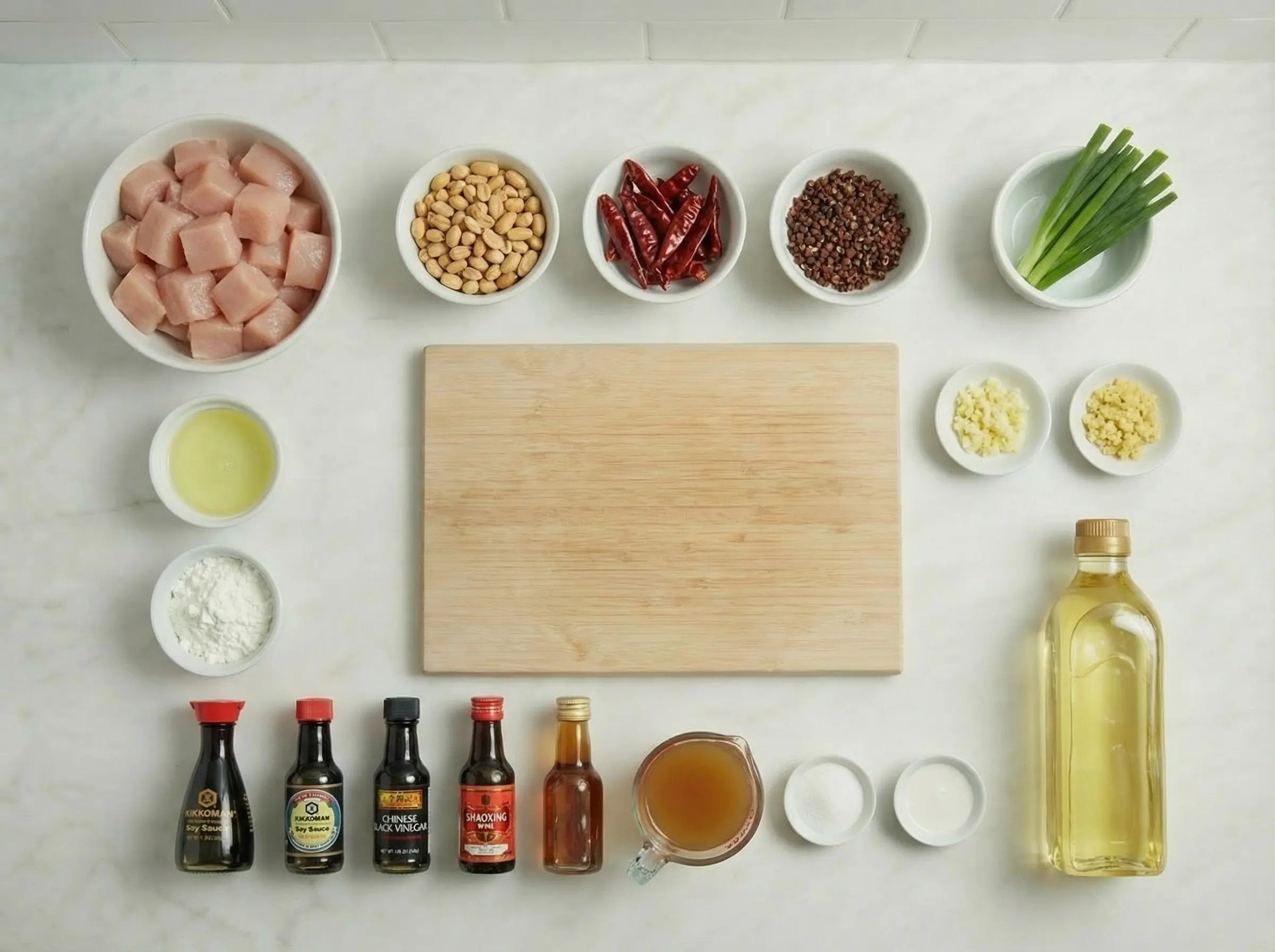
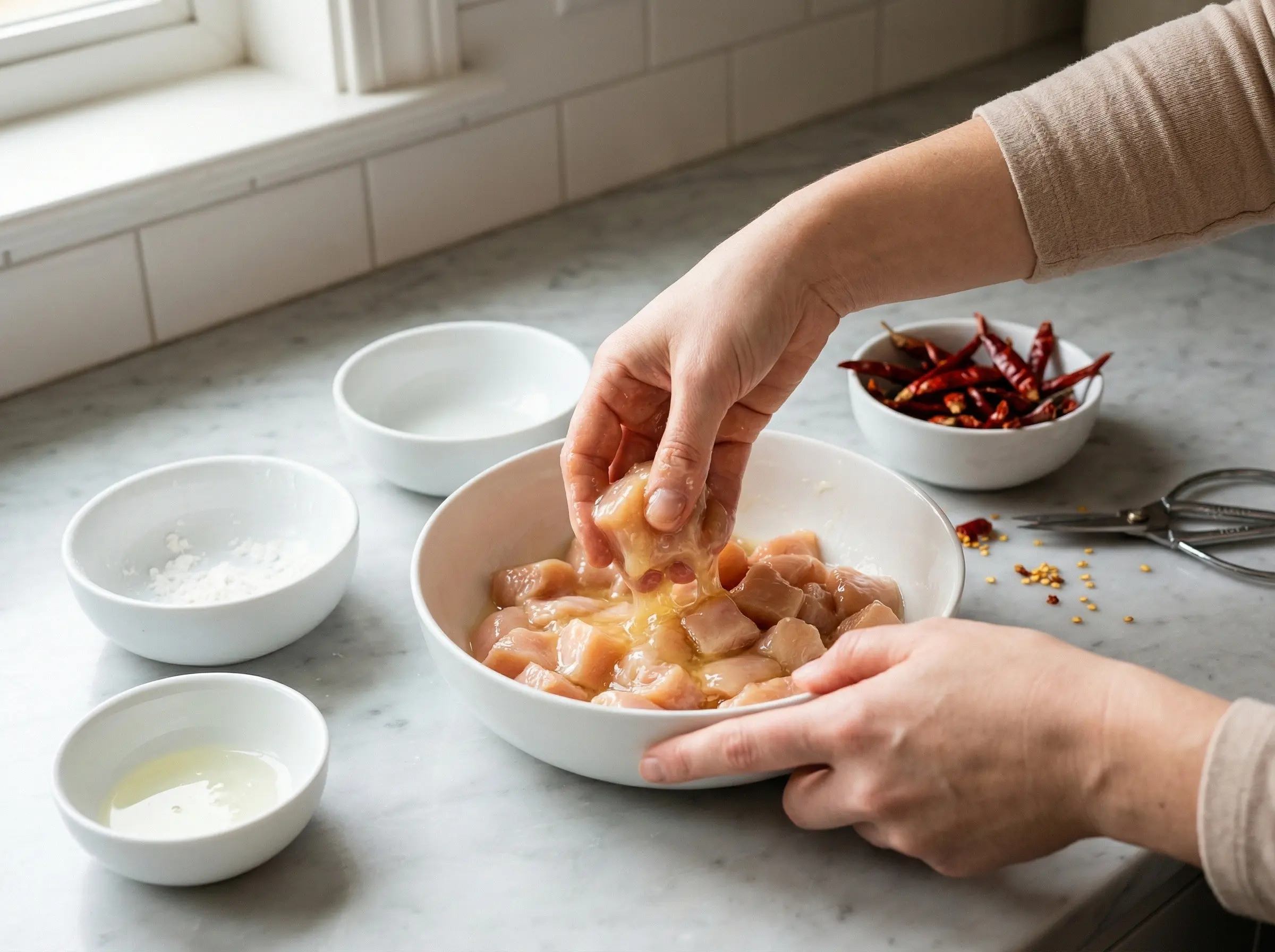
1Velvet the chicken for silky texture. Place the cubed chicken in a bowl and add the egg white and 2 tablespoons cornstarch. Mix well with your hands until each piece is evenly coated - the mixture should be slightly gluey. Let the chicken marinate for at least 15 minutes, or up to overnight in the refrigerator. This velveting technique is the secret to the silky, tender texture found in Chinese restaurant stir-fries. While the chicken marinates, prepare the dried chilies by cutting them in half or into 1-inch pieces with scissors. Shake out and discard most of the seeds to reduce excessive heat while keeping the flavorful flesh.
2Prepare the kung pao sauce. In a small bowl, combine the soy sauce, dark soy sauce, Chinese black vinegar, Shaoxing wine, sugar, sesame oil, and chicken broth. Stir until the sugar dissolves. Taste and adjust - it should be a balance of savory, tangy, and slightly sweet. In a separate small bowl, mix the cornstarch slurry (1 tablespoon cornstarch with 2 tablespoons water) and set aside. Prepare all other ingredients: mince the garlic and ginger, cut the green onions into 1-inch pieces separating white and green parts, and measure out the peanuts and Sichuan peppercorns if using.
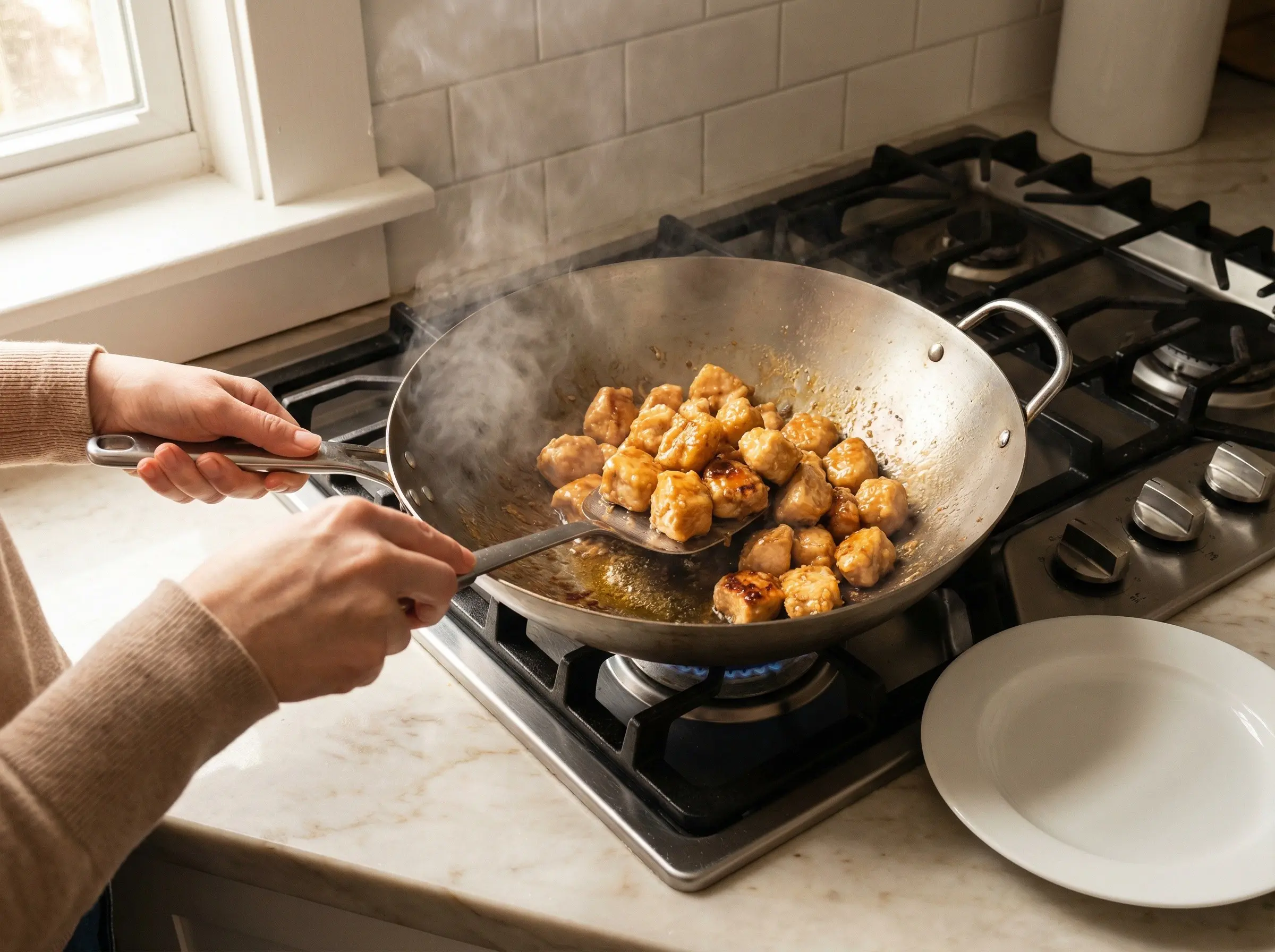
3Heat a wok or large skillet over high heat until smoking. Add 2 tablespoons of vegetable oil and swirl to coat. Add the velveted chicken pieces in a single layer - work in batches if needed to avoid overcrowding. Let the chicken sear without moving for about 1 minute until golden on the bottom, then stir-fry for another 2-3 minutes until the chicken is cooked through and lightly golden all over. The coating should be slightly crispy. Transfer the chicken to a plate and set aside.
4Return the wok to high heat and add the remaining tablespoon of oil. Add the dried chilies and Sichuan peppercorns if using. Stir-fry for 20-30 seconds until the chilies darken slightly and become very fragrant - be careful not to burn them or they will turn bitter. The oil should take on a reddish tint from the chilies. Add the white parts of the green onions, minced garlic, and minced ginger. Stir-fry for about 30 seconds until very fragrant. The aromatics should sizzle and perfume the air.
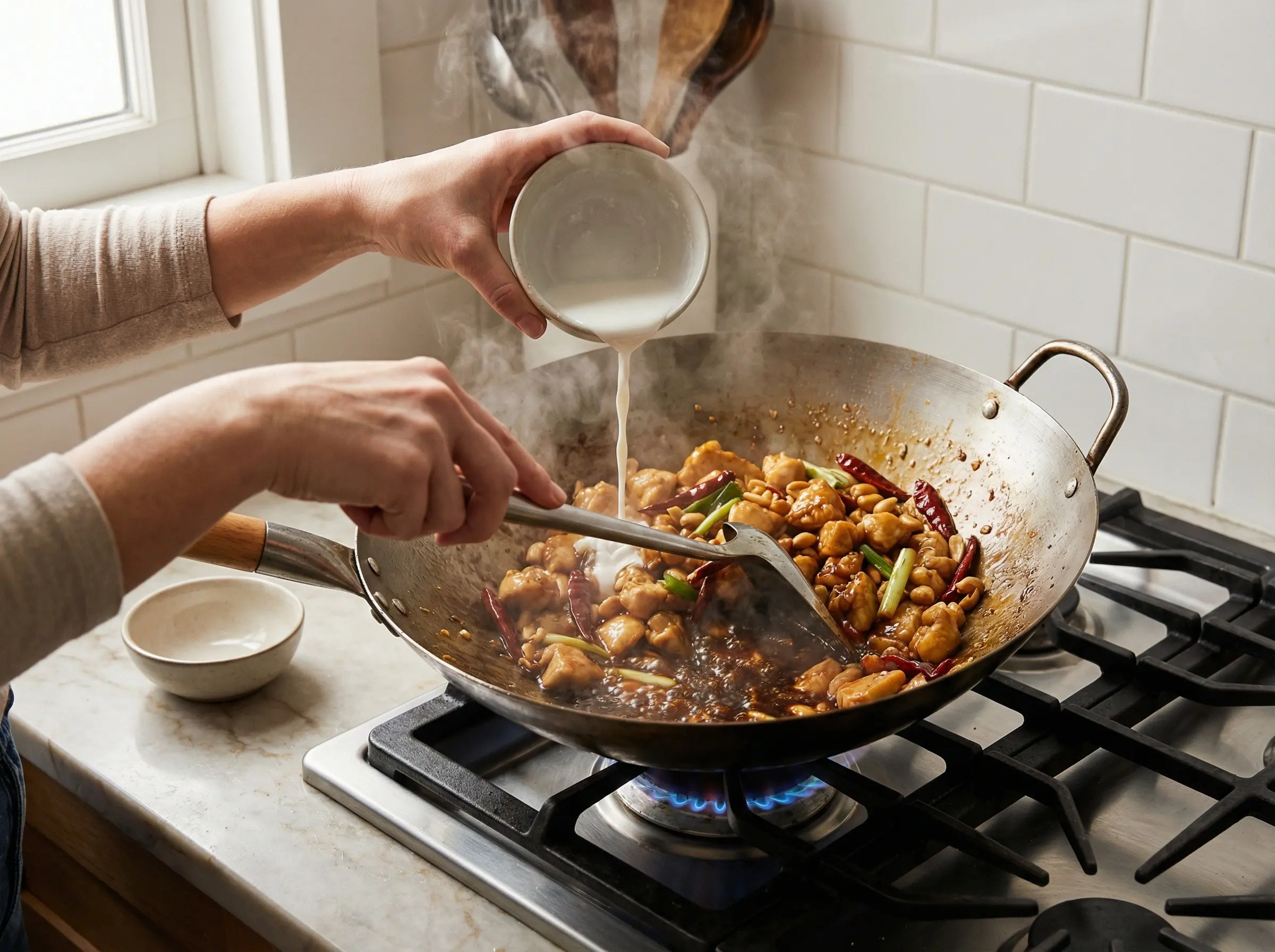
5Return the cooked chicken to the wok and toss to combine with the aromatics. Give the sauce a quick stir and pour it into the wok. Toss everything together vigorously as the sauce comes to a rapid boil. Stir the cornstarch slurry to recombine, then pour it into the wok while stirring constantly. The sauce will thicken almost immediately into a glossy coating. Continue tossing for another 30 seconds until the sauce evenly coats all the chicken pieces. The sauce should be thick enough to cling to the chicken but not gloppy.
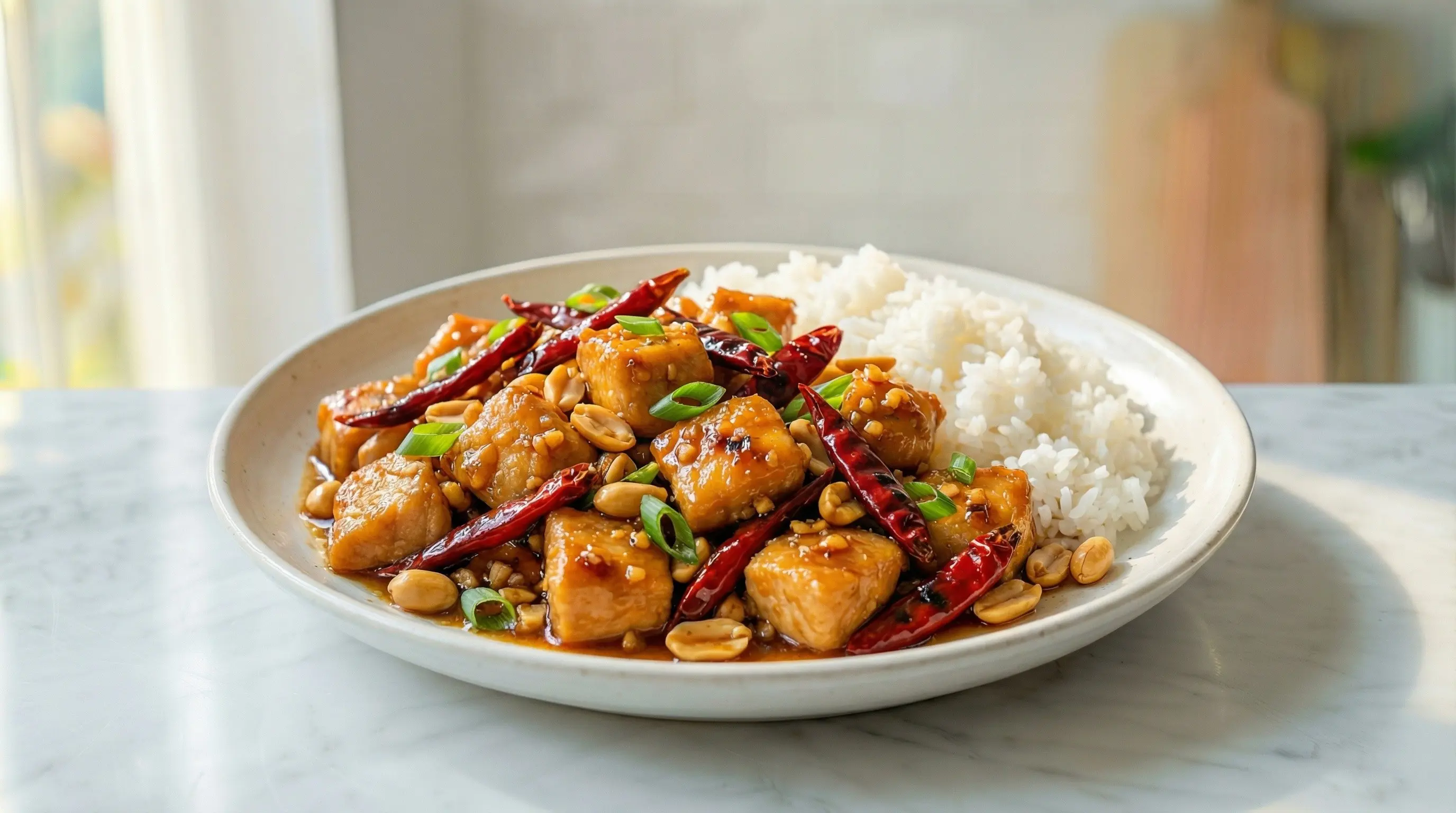
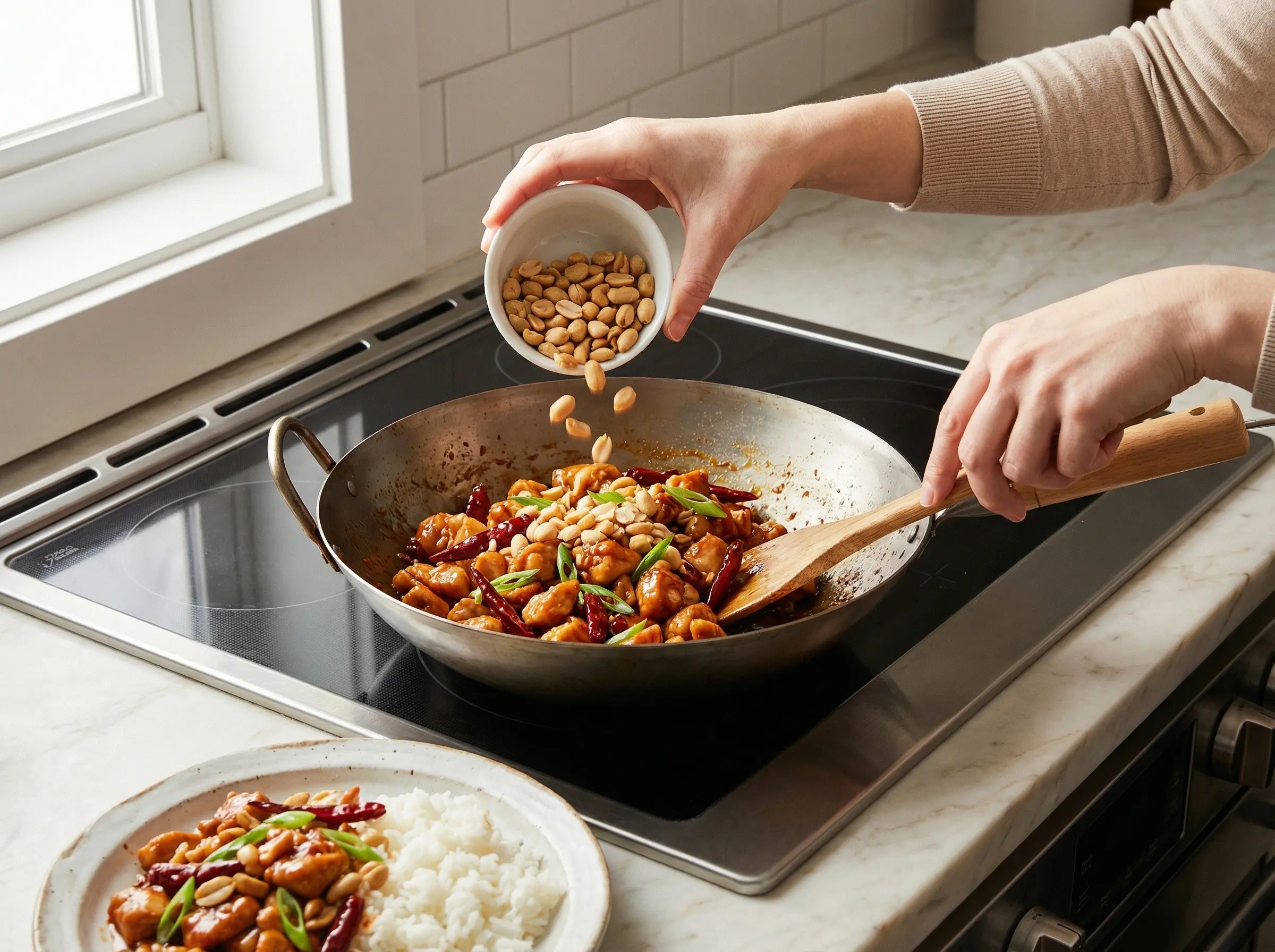
6Add the roasted peanuts and green parts of the green onions. Toss briefly just to combine and warm through - the peanuts should retain their crunch and the green onions should stay vibrant. Taste and adjust seasoning: add more vinegar for tanginess, more sugar for sweetness, or a splash of soy sauce for saltiness. Transfer immediately to a serving plate. The dish should be glossy and aromatic, with the red chilies and green onions providing visual contrast against the golden chicken and tan peanuts. Serve immediately over steamed rice while the chicken is hot and the peanuts are still crunchy. Kung pao chicken is best eaten right away - the peanuts will soften and lose their crunch if the dish sits too long. For maximum authenticity, leave the dried chilies in the dish for presentation, but warn diners that they are intensely spicy if eaten directly.


 Download